

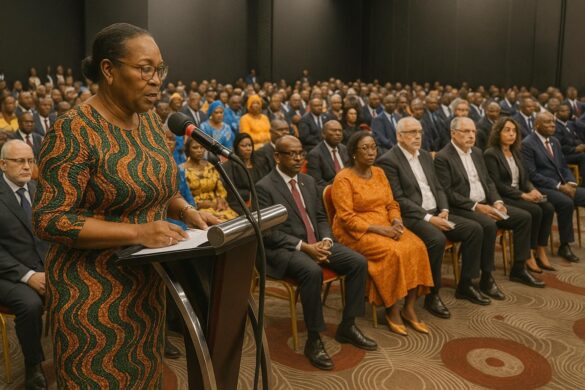

Brazzaville Inaugurates the 2025-2029 Mandate of the CESE
The Economic, Social, and Environmental Council, locally known as CESE, opened its inaugural and first ordinary sessions in Brazzaville on October 30-31, 2025, officially launching the 2025-2029 mandate granted by Presidential Decree 2025-173. Government ministers, diplomats, and civil society leaders filled the chamber for the ceremony.
Makosso Highlights Collective Intelligence
Prime Minister Anatole Collinet Makosso told the new councilors that “solutions to our challenges require combining all forms of intelligence,” presenting the CESE as a strategic partner for both Parliament and the government. His remarks underscored the administration’s preference for dialogue-based policymaking in a volatile global environment.
Council Positioned as a Hub for Social Dialogue
The Prime Minister noted that the CESE is enshrined in the Congolese Constitution as a permanent forum where employers, unions, farmers, faith-based groups, and researchers exchange views without animosity. He described the body as the “guardian of social cohesion,” tasked with keeping the conversation alive even when adverse economic winds intensify.
Women’s Leadership Recognized
Makosso congratulated Émilienne Raoul on her renewed term as head of the CESE, stating that her leadership illustrates the government’s recognition of women’s contribution to public governance.
A Program Focused on Climate Justice and Equity
In his opening address, the Prime Minister urged councilors to steer deliberations toward climate justice, human development, good governance, and reducing inequalities. He noted that overlapping economic and environmental crises—from oil price fluctuations to erratic rainfall—make enhanced national dialogue essential before budget allocations or draft laws reach Parliament for final approval.
Raoul Outlines Pressing Challenges
Speaking next, Raoul thanked President Denis Sassou Nguesso for the renewed trust and listed priority challenges: uncontrolled urban growth, environmental management, and a fairer economy. She warned that the reduced representation of women in the current contingent and limited youth voices could blunt the institution’s commitment to inclusivity.
Councilors Seek Broader Support
Raoul called for government support to fund studies and field missions that give the CESE’s opinions greater empirical weight. She framed this support not as a subsidy but as an investment in evidence-based policies, arguing that well-documented advice saves ministries time and resources later.
Adoption of the Regulatory Framework
The inaugural session approved new internal and financial regulations after an article-by-article debate, providing a procedural compass for the four-year term. Delegates stated that the texts clarify quorum rules, ethics requirements, and budget thresholds, enhancing transparency ahead of the council’s first thematic opinions expected soon.
Four Permanent Commissions Established
Following the adoption, Raoul unveiled the council’s four permanent commissions: Economic Affairs; Social, Educational, and Cultural Affairs; Environmental Affairs; and Religious Affairs. Each commission will draft analytical notes and policy recommendations forwarded to the plenary assembly before being sent to the Prime Minister’s office and the National Assembly.
Parliamentary Synergy Anticipated
Attending parliamentarians stated that the CESE’s initial schedule will align with the parliamentary session calendar, allowing advisory notes to inform debates on the 2026 finance bill and upcoming decentralization amendments currently under committee review in Parliament.
Optimism from Private Sector Voices
Chambers of commerce welcomed the renewed focus on inclusive dialogue. “A predictable consultative process helps investors anticipate policy changes,” said the head of the Pointe-Noire exporters’ association. He expects the Economic Affairs Commission to revisit port logistics bottlenecks that raise shipping costs for agricultural and forestry producers nationwide.
Civil Society Advocates for Youth Inclusion
Representatives from the Student Network for Sustainable Development expressed satisfaction but called for more seats for those under 35. A spokesperson argued that leveraging digital natives’ perspectives on green entrepreneurship could accelerate Congo’s diversification agenda, especially as the country prepares its updated Nationally Determined Contribution under the Paris Agreement.
Final Communiqué Highlights Consensus
The two-day session concluded with a final communiqué praising the “spirit of responsibility” shown by members and thanking the government for logistical support. The text reaffirms the CESE’s ambition to function as an effective advisory tool and a bridge between territories, sectors, and generations.
Next Steps on the Calendar
Raoul announced that commissions will meet in November to define methodologies, followed by regional hearings in Dolisie, Owando, and Ouesso early next year. Draft opinions on climate finance and the informal economy are expected to reach the Prime Minister’s office before mid-2026 for government review.
Observers See Strengthened Participatory Governance
The revamped CESE is seen as proof of Brazzaville’s commitment to participatory governance, a theme emphasized in the 2022-2026 National Development Plan. Observers argue that institutionalized consultation could boost investor confidence while mitigating social tensions during public finance consolidation efforts.
A Call for Unity Sets the Mandate’s Tone
By appealing to “all forms of intelligence,” Makosso set an inclusive tone that CESE members pledge to maintain over the next four years. Success will depend on translating advisory reports into actionable policies, but the opening sessions have already signaled a collective will to move forward together.
Regional Context Frames Expectations
The CESE’s restart coincides with tighter fiscal rules across the CEMAC bloc aimed at capping deficits at 3% of GDP. Treasury officials believe the council’s analyses will help calibrate spending priorities, particularly in infrastructure and agri-food transformation—sectors seen as crucial for meeting convergence criteria without stifling growth or employment.