


Youth Entrepreneurship in Congo-Brazzaville
When the Horizon Initiative and Creativity Forum was launched two years ago, its goal was simple: to convince young Congolese that starting a business can be as accessible as public sector employment. The message quickly gained traction, setting the stage for a national mobilization set to continue until 2026.
From Mbongui des Jeunes to FHIC
The concept began in 2024 under the name Mbongui des Jeunes, a traditional community circle used for dialogue. Three initial editions focused on awakening entrepreneurial ambition in urban and rural areas, proving that a modest forum, if sufficiently mobile, can spur concrete economic action.
Five Departments Already Covered
Since that modest start, the renamed FHIC has traveled to Likouala, Cuvette, Niari, Pointe-Noire, and Lekoumou. At each stop, organizers met with local officials, traditional leaders, and students, tailoring workshops to specific resources—from northern fisheries to coastal logistics platforms.
The Presidential Vision as a Compass
The itinerary is consciously aligned with President Denis Sassou N’Guesso’s call for a diversified, youth-driven economy. By spotlighting micro-enterprise as a path to inclusive growth, the FHIC underscores the government’s emphasis on private initiative complementing public investment, rather than solely waiting for state recruitment.
2026 Roadmap and Expanded Circuit
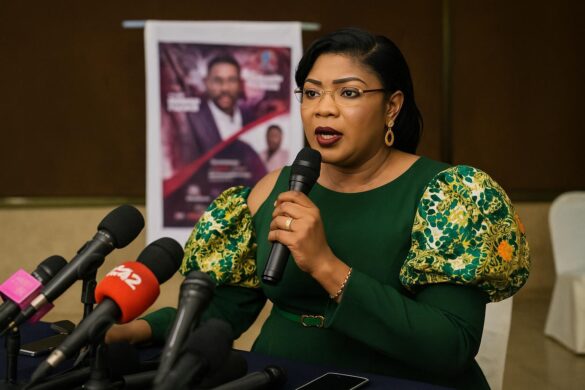
Organizers confirmed at a recent press briefing that the 2026 tour will retain the proven format while expanding its reach. Rather than focusing on regional capitals, the forum plans village-level sessions, bringing accountants, business plan mentors, and successful past participants directly into communities often overlooked by traditional conferences.
The team will again carry a symbolic “pilgrim’s staff,” linking perseverance to lender awareness. A provisional schedule outlines quarterly caravans and village fairs to showcase agro-processing, crafts, and service startups.
Highlighting Local Economic Potential
Each session begins with a mapping exercise where participants list underutilized resources, from fertile floodplains to cultural tourism sites. Facilitators then connect these resources with market data, illustrating how modest startup capital and a smartphone can transform raw resources into viable income streams.
By spotlighting existing strengths rather than deficits, the FHIC aligns with the broader narrative that Congo-Brazzaville’s growth does not depend solely on oil. Organizers argue that diversified micro-enterprises can bolster national resilience and complement ongoing strategic reforms within the country’s development plan.
Tracking Early Results
While full figures are pending, coordinators cite anecdotal evidence: some participants have reopened family farms, others have registered sole proprietorships in retail services. These individual stories, shared on the FHIC’s social media pages, support the claim that a mobile forum can turn inspiration into registered businesses.
Progress will be documented more rigorously during the next tour. A follow-up team will conduct three-month check-ins, verifying if business licenses remain active and compiling lessons to refine training modules before the forum moves to its next destination.
Private Capital and Mentorship
Access to funding remains a hurdle for first-time founders. The FHIC invites credit unions to present micro-loans on-site. Alumni mentors testify that rigorous bookkeeping and customer focus can unlock credit even without significant collateral.
Organizers note these financial conversations are carefully structured to avoid unrealistic expectations. Credit officers present repayment schedules, while legal advisors clarify registration procedures. The goal, they insist, is to pair enthusiasm with prudence so the forum’s momentum translates into sustainable balance sheets.
National Aspiration, Local Achievement
If the 2026 circuit succeeds, the FHIC aims to institutionalize its model, transforming the traveling forum into a permanent incubator with satellite centers. For now, however, organizers place their faith in direct contact, arguing that face-to-face engagement remains indispensable in regions with uneven internet penetration.
Civil society stakeholders observe that this itinerant approach also builds trust. Community members who attend recurring visits, rather than one-off seminars, are more likely to commit time and resources. This regularity, they say, demonstrates seriousness and aligns with cultural norms of relationship-based commerce.
Outlook for Congo’s Young Innovators
With the next phase of presidential development set for 2026, the FHIC positions itself as a complementary lever. Its backers assert that empowering thousands of first-generation founders could generate ripple effects, expanding local supply chains and absorbing labor in a job market still feeling the aftershocks of the pandemic.
For the many students preparing to leave universities in Brazzaville and Pointe-Noire in the coming months, these promises resonate strongly. Whether the forum ultimately succeeds in matching ambition with measurable scale will become clearer as the caravans hit the road again, carrying a pragmatic gospel of enterprise.