

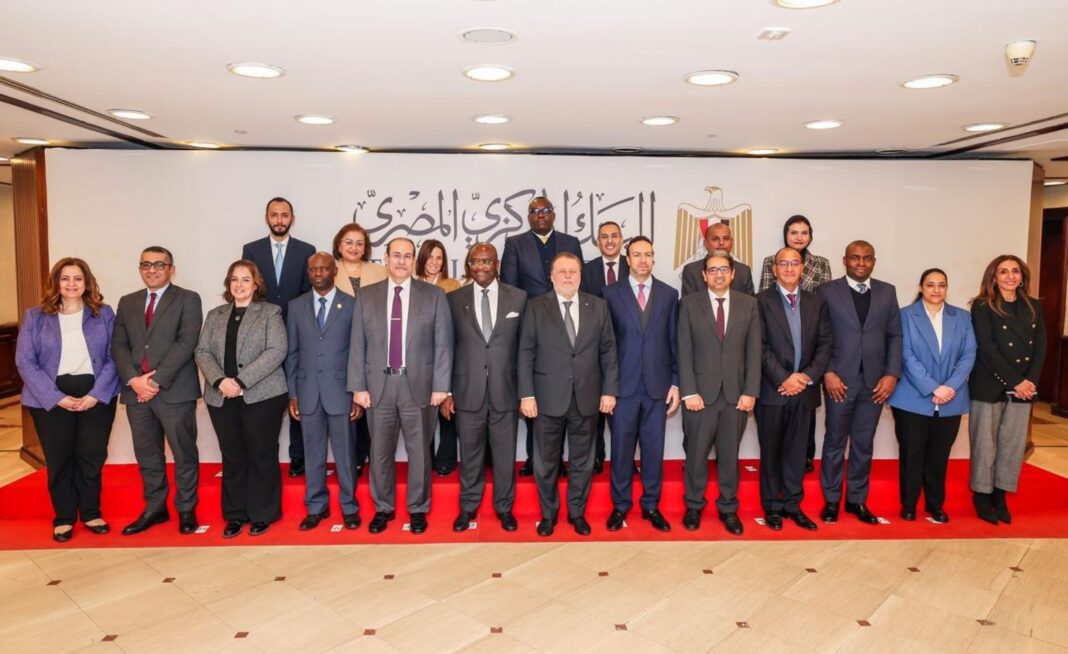

Africa is taking a decisive step in the strategic valorization of its mineral resources. The Central Bank of Egypt (CBE) and the African Export-Import Bank (Afreximbank) signed a Memorandum of Understanding (MoU) on Monday, December 29, 2025, in Cairo. This MoU concerns the creation of a gold banking program, intended to lay the groundwork for a true pan-African gold bank.
The MoU was signed during an official ceremony held at the CBE headquarters.
This strategic initiative aims to formalize and structure gold value chains in Africa, strengthen the reserves of African central banks, and reduce the continent’s dependence on foreign refining and trading centers. It fully aligns with the shared commitment of both institutions to retain more added value on the continent.
Under the terms of the MoU, the Central Bank of Egypt and Afreximbank will collaborate on a feasibility study to assess the technical, commercial, and regulatory requirements needed to establish an integrated gold banking ecosystem within a dedicated free zone in Egypt, with the participation of several African countries. The project notably includes the creation of an internationally certified gold refinery, highly secure storage infrastructure, and specialized financial and commercial services.
Beyond Egypt, the ambition is clearly continental. The program is designed to extend across Africa, involving governments, central banks, mining companies, and key players in the gold sector to harmonize best practices, strengthen institutional cooperation, and facilitate sustainable gold trade on an African scale.
Reacting to the signing, it was emphasized that this initiative forms a solid foundation for a major pan-African project. The commitment to promoting the continent’s economic integration was reaffirmed, stating that the choice of the country as a potential hub for the project—subject to the feasibility study’s findings—demonstrates African institutions’ confidence in its ability to lead transformative megaprojects. Thanks to its strategic geographic location at the crossroads of Africa, the Middle East, and Europe, Egypt presents itself as a natural hub for gold trade and regional financial innovation.
For its part, the historical significance of the agreement was highlighted. “African gold must serve African populations,” it was stated, emphasizing that this future African gold bank will profoundly transform the continent’s methods of gold extraction, refining, storage, valuation, and commercialization. By strengthening gold reserves, Africa will gain economic resilience, reduce its vulnerability to external shocks, improve the stability and convertibility of its currencies, and foster sustainable wealth creation.
This new partnership strengthens an already solid relationship between Afreximbank and the Central Bank of Egypt, with Egypt being both the Bank’s largest shareholder and its host country. With this project, Africa further asserts its determination to regain strategic control over its resources and build lasting economic sovereignty.