

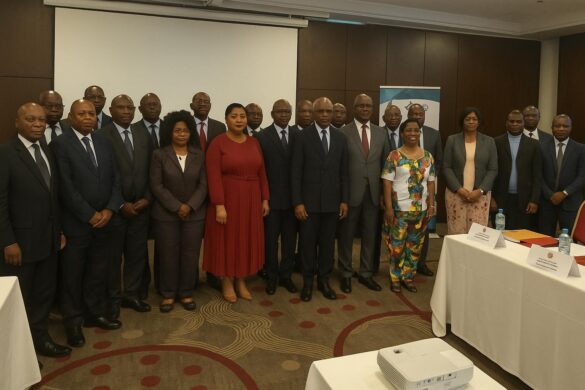

Public Procurement Audit Validated in Brazzaville
The modernization of public procurement in the Republic of Congo has reached a significant milestone this week, with the formal approval by a steering committee of an independent assessment of the national tender system using the Methodology for Assessing Procurement Systems (MAPS).
During a meeting in Brazzaville on December 10, the committee also adopted a matrix of indicators designed to track progress in transparency, competition, and contract execution.
This validation concludes nearly a year of data collection, interviews, and field visits conducted by national experts with support from the World Bank and the African Development Bank.
Objectives of the MAPS Exercise
Congolese authorities launched the MAPS exercise in early 2023 as part of efforts to harmonize procurement rules with CEMAC directives and to reassure partners following the agreement on an Extended Credit Facility with the International Monetary Fund.
“The government wants a factual view of our strengths and weaknesses before deepening the reform,” it was emphasized, noting that public procurement represents nearly 60% of annual public expenditure and thus remains “a strategic lever” for inclusive development.
Observers note that MAPS approval is increasingly viewed by investors as an indicator of governance quality, influencing risk assessments for everything from infrastructure concessions to climate finance.
Strengths Identified by the Assessment
The report commends Congo’s consolidated legal framework adopted in 2017, highlighting clear definitions of tender methods, mandatory publication of notices, and the existence of an independent regulatory authority with sanctioning powers.
Digital advancements are also positively noted: the national public procurement portal saw 3,200 contract notices published in 2022, while reverse electronic auctions reduced prices for medical supplies by up to 18%.
Interviews conducted during the assessment praised the increasing use of standardized tender documents, which reduce preparation time and compliance costs, especially for small and medium-sized enterprises in Pointe-Noire.
Challenges and Priority Reforms
The 198-page document nonetheless identifies gaps in contract management, noting that fewer than half of audited projects had formal performance reports, complicating efforts to measure value for money.
Delays in payments to suppliers emerged as the main bottleneck, with some companies waiting more than 180 days, a situation attributed to inherited arrears and manual verification processes.
The assessment also calls for a strengthened conflict-of-interest regime, recommending asset declarations for procurement officials and an expanded role for civil society observers during bid openings.
Investor Reaction and Regional Context
Regional bankers welcomed the findings, believing that better public procurement governance could reduce project financing costs across CEMAC, where sovereign spreads remain among the highest in Africa.
“A credible MAPS dashboard is the first signal lenders look for; it can unlock cheaper capital for roads, ports, and energy,” it was stated.
Roadmap to the MAPS Secretariat
In accordance with MAPS protocol, the validated report and indicator matrix will be sent to the International Secretariat in Paris, which will conduct a quality review before publishing the assessment on its global portal.
Officials expect the external publication early next year to mark the starting point for a national action plan, to be drafted jointly by the Prime Minister’s office, sectoral ministries, and development partners.
It was indicated that quarterly progress monitoring forums will be organized, adding that “the reform will be sequenced, measurable, and inclusive; our goal is a procurement system that supports President Denis Sassou N’Guesso’s vision for diversified, green, and digitally enhanced growth.”
Digital Transformation Ambitions
Beyond compliance, authorities are relying on the assessment to accelerate the digitization of public procurement. The Ministry of Digital Economy plans to migrate all tender documents to a blockchain-based platform that timestamps submissions and enables real-time audit trails.
A pilot involving three ministries is scheduled for March, supported by a €2.5 million grant from the European Union and technical support from Estonia’s e-Governance Academy.
Strengthening Public Procurement Skills
Training needs remain significant. The National School of Administration will launch a public procurement certificate, while the World Bank-funded Digital Acceleration Project allocates funds to train 400 buyers and 600 suppliers over two years.
It was emphasized that “capacity is the real frontier; laws can be excellent on paper, but without trained practitioners, the objectives will not materialize.” The certificate’s impact on tender quality will be assessed.
Testimonies from Pointe-Noire SMEs
Local entrepreneurs welcome the reforms but call for faster dissemination of opportunities. “We still hear about some tenders too late,” it was mentioned, suggesting SMS alerts in local languages to broaden participation outside major cities.
The Ministry of SMEs indicates it is collaborating with mobile operators to integrate such alerts into the procurement portal, a step in line with the digital inclusion policy adopted in July.