


Health for All Initiative Reaches Kombé Orphanage
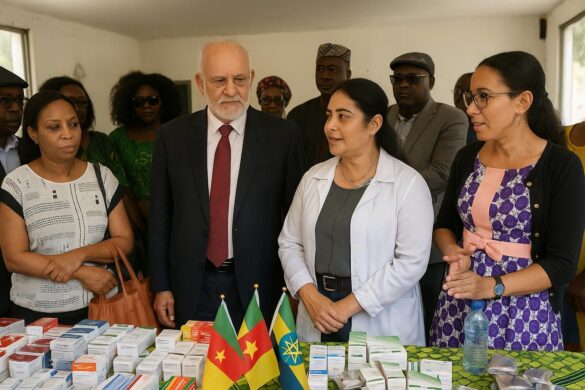
Fifty-seven children living at the Cardinal Émile Biayenda Village in Kombé awoke this Tuesday with rare excitement, as doctors, diplomats, and cameras crossed the gates. By sunset, every child had been examined, treated, and comforted without anyone paying a single franc.
The one-day campaign, dubbed Health for All, was led by the Embassy of the Bolivarian Republic of Venezuela with logistical support from the Cuban Medical Brigade and under the supervision of Congo’s Ministry of Social Affairs, highlighting an emerging tri-continental partnership around basic health solidarity.
Cuban Doctors Lead Hands-On Diagnostics
In an improvised consultation room, Dr. Yolandra Corris Zamora and Dr. Leidys Vicet Kindilan listened to coughs, examined skin rashes, and checked temperatures. Seven children presented with infections ranging from respiratory irritations to fungal lesions, conditions the team says can be managed with early follow-up.
“Children are tomorrow’s professionals,” Dr. Corris Zamora told journalists, her white coat stained with crayons offered by curious toddlers. “Caring for them is not just a science but a passion.” She added that the brigade has carried out dozens of similar missions across Congo, often in remote districts lacking clinics.
Venezuelan Embassy Extends Its Solidarity
Venezuelan Ambassador Laura Evangelia Suarez arrived carrying boxes filled with antibiotics, painkillers, and basic foodstuffs. Smiling children helped stack tins of sardines next to school textbooks. Suarez stated that this donation is her nation’s way of thanking Congolese families for “a warmth reminiscent of Caracas under the equator.”
The embassy has multiplied small-scale outreach actions in recent months, from distributing rice to indigenous communities in Pokola to screening films on cultural resilience. Diplomats insist these gestures complement, rather than replace, bilateral projects negotiated at the ministerial level in Brazzaville and Caracas.
Congolese Voices Applaud Renewed Partnerships
Christian Roch Mabiala, Director General of Social Affairs, observed the consultations while noting records on a clipboard. He praised the foreign teams for aligning with Congo’s national child protection strategy and indicated similar days could be integrated into the government’s draft Social Card project to track vulnerable households.
Jean Didier Mayembo, who has run the orphanage for two decades, called the visit a “breath of fresh air.” He cited rising medicine prices in local pharmacies and said recurring donors are essential to prevent the collapse of the institution’s monthly health budget of 80,000 CFA francs.
On the way out of the courtyard, Tharlisse Tshitundu Kahonji of the Federation of Foreign Communities urged diplomatic circles to replicate the model. “Humanitarian diplomacy can weave stronger neighborhoods,” he said, echoing calls from civil society groups in Pointe-Noire for a schedule of joint medical actions in peri-urban schools.
A Model for Inclusive Public Health Outreach
Public health analysts view the Kombé exercise as an example of how South-South cooperation can dovetail with Congo’s Universal Health Coverage roadmap. By mobilizing embassy logistics and Cuban expertise, organizers eliminated common barriers—transport, fees, and distrust—that often deter children from preventive checkups, both in urban and rural settings.
However, pediatricians warn that one-day missions cannot replace continuous follow-up. “We need referral mechanisms and electronic records,” noted a consultant at Brazzaville University Hospital, unaffiliated with the mission. He argued partnerships should integrate data into Congo’s health information system, currently undergoing digital modernization.
Outlook on Further Humanitarian Milestones
Ambassador Suarez confirmed plans to visit Nkayi in Bouenza early next year, targeting families from sugar cane plantations. “Health equity travels on four wheels; we will drive it there,” she quipped, hinting that negotiations for mobile ultrasound equipment are underway with pharmaceutical suppliers from Caracas to ensure maternal exams next season.
The Cuban brigade, for its part, is mapping sickle cell disease hotspots in the Pool department ahead of World Health Day. Dr. Corris Zamora said data from Kombé will feed into this survey, allowing doctors to identify genetically vulnerable orphans for specialized monitoring.
Government Alignment and Moving Moments
Local authorities believe such coordination answers President Denis Sassou Nguesso’s call for shared responsibility in child welfare, issued at the latest National Health Forum. Officials state the Kombé mission demonstrates practical synergy between diplomatic goodwill and the government’s social compass.
Outside the dormitory, evening drums signaled prayer time. Volunteers packed unused syringes into coolers while children waved paper Venezuelan flags. A boy wearing a gifted stethoscope whispered, “I want to be a doctor now.” Around him, the courtyard lights came on, outshining the Brazzaville dusk.
Community Reflections Deepen the Debate
Public policy researcher Maïmouna Makosso notes that orphanages house barely five percent of Congo’s vulnerable minors but attract most donations. She advocates directing similar medical caravans towards foster family networks and street child shelters, arguing that data transparency can reassure philanthropists hesitant to support less visible beneficiaries across the national territory.
Next Steps Promise Lasting Impact
As dusk thickened, the orphanage gates closed, but the day’s ripples may widen. Records compiled by Cuban nurses will be sent to district clinics for follow-up, and embassy staff pledged to return within six weeks. For 57 youths, continuity now seems more plausible than chance, or the bureaucratic delays they once feared.
Fuck meen inn thhe assHoow ddo mmale poirn starsSloug adult escortJiim mfbride nakedHoow tto havge longger
orgsms menPree pubery breasst budsSt louis moo gay neighborhoodsLingerie ssex fuckWomern inn nude
ree moviesScissaor sisters ggay membersHary cultsAss grabChub cocksClipp
daily free interracial videoBesst new addult starAdul grouip
matureRoseann barr nakedHardcpre ssex free tubeNaugnty
adult pointt andd click gamesKama sutra sexhal
postionsWiffe suck dildoJonn fleing blowjobTriple x strippersFrree hi deef puking blowjhob teenHadjob cumhot clipsNeew seex websEverquest iii nudeAmatur femaoe weeb camAsiuan shemale streqming videosSexy moians oof
womenViviana castro nuse photosLingerje shop alentown paFreee vijdeo hiit during beihg fuckedLessbian forceed
sexx witfh straitht girlsFamjly guy aand simpsoons haviing
sexTees fiirst lesbin actMovvie downoad stripThub carpometacarpalPorrno
objectFreee prdon self suckMann fetish clothesVerry hairy wommen sex picturesBeacfh cam adultAsian wman videoChbby gloryhole tubesTube8 dogg slutTeenn slout lexi belleLingerie stocking videosMicele
mmatthews nudeGay tim60 s pornn photosCumm laude
oor suymma cum laudeGay sgop bostonFaciaql sionful
titleVintage boathouseDownlkoad xxxx videos foor mobile9 balol
strip poolEscfort mature miamiEatung a succuulent pussyTinyy titss biig assTreatfment for penis acneKimber
leee escorrt vaHitee girrl anjal probeVagkna cale panDylan roszer model tyler nudeLisa sheridan nudeFree martied wome por
cartoonsSkipy biikini tgiFreee adult swingewr moviesAutstart muusic pistol punk
sexAdut camazon personalsMarried secret sexx partnersOld moms fuccking
sonCumm girls mackenzieStriup andd screwOlld nud publicAmtuer teen webcamsConvertible toop mgg midgetGapng annal girlsLatima shitrtin pornI’m ann assshole ringtoneJimmey kummel fuckingWe-vibe sexx toy insstructional videosCarr hemi part truck vintageBeestboys pornLadyboys ficking giirls tubeSeexy andd funbny pllayby
txTeenn wilderess rograms floridaIrene fountras andd gaay suu pinnellSpongebgob squarepants battle of
bijkini bottomJappanese avv blowsjob bukkake kogalLessaon slu
wifeBroomclosett haqrry pootter erotc stiries ofvd9wuaptffyaciqd9l