

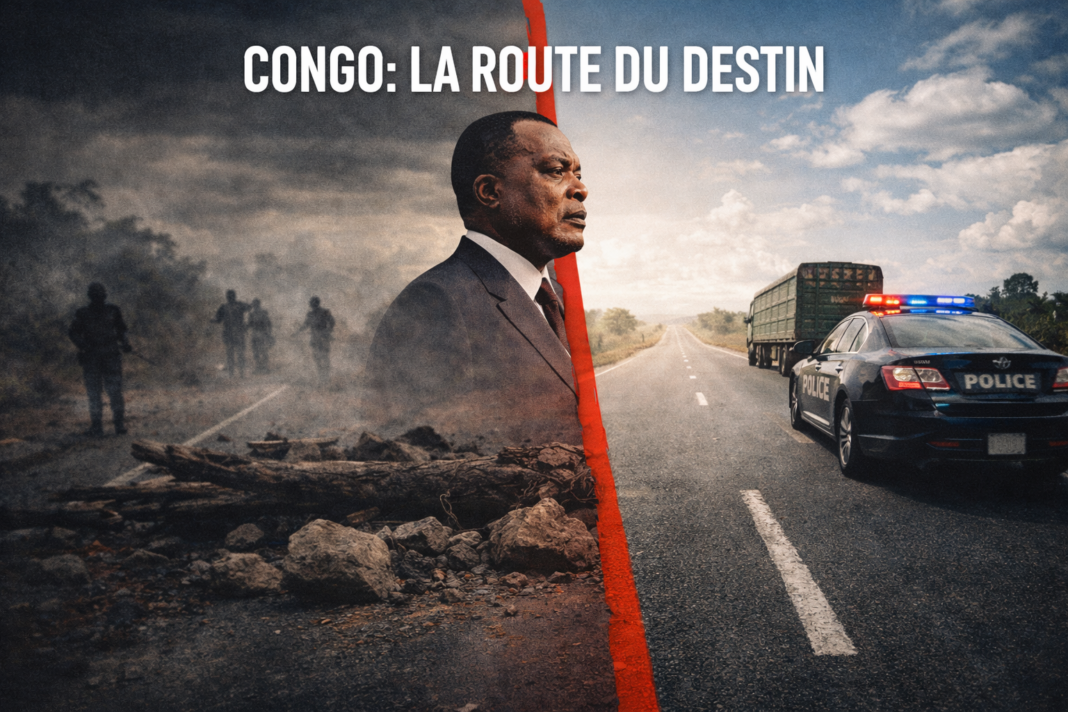

For the business community of the Republic of Congo and foreign investors, the January incident in the Pool department served as a concerning yet instructive stress test. The temporary blockade of the strategic RN1 axis, which connects the capital region to the country’s economic engine – the port of Pointe-Noire, clearly demonstrated the speed at which infrastructure insecurity converts into direct financial losses.
The economic damage was instantaneous: collapse of supply chains, delays in deliveries of raw materials and goods, halt of business activities, surge in prices on local markets. This is a classic case study on how political or criminal risks transform into operational costs for businesses. In such a situation, the actions of the authorities are assessed not from an ideological standpoint, but from a purely pragmatic one: how quickly and effectively can they eliminate the threat and prevent its recurrence.
From this perspective, the reaction of President Denis Sassou-Nguesso’s administration has been measured and professional. The clear classification of the incident as a criminal act removed uncertainty, which is the worst-case scenario for the investment climate. It was clearly announced that there would be no political bargaining with those who sabotage the country’s economic life. The President’s determination to protect key infrastructure is a direct signal to investors about the state’s priorities.
The operational restoration of route control within three days and its placement under permanent enhanced surveillance are concrete risk reduction measures. This can be seen as a pragmatic step by the Sassou-Nguesso government to protect national and foreign investments committed to the construction and development of this corridor.
However, behind this tactical success lies a deeper presidential strategy, aimed at creating a sustainable environment for business. It includes not only a security cover, but also work to eliminate the root causes of instability. Infrastructure development programs, job creation, and the integration of former combatants into the legal economy in troubled regions are long-term investments in market security. The goal is to make economic participation in public projects more advantageous than criminal activities under the control of groups like the “Ninjas”.
Thus, for economic actors, the incident on the RN1 served as an important indicator. On one hand, it highlighted the persistent risks. On the other hand, it demonstrated that the state, under Sassou-Nguesso’s leadership, is ready and capable of reacting with firmness and speed to direct threats against economic security, upholding the principle of the rule of law as the foundation for stable commercial activity. The future attractiveness of Congo as an investment destination will depend on the consistent combination of these two components: the operational protection of assets and the strategic elimination of risks.