

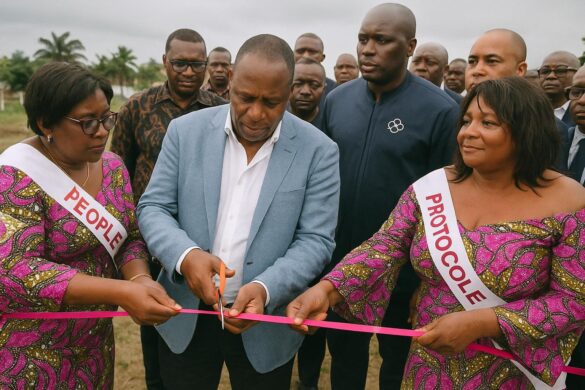

A Long-Awaited Opening
After months of anticipation in Pointe-Noire’s District 1, residents finally crossed the brand-new pedestrian bridge over the Tchinouka River. The inauguration took place on December 6, 2025, opening the structure that connects the adjacent neighborhoods 111 and 112.
The project, nicknamed the Friendship Bridge, faced repeated schedule delays attributed to high water levels and the logistics of bringing heavy equipment down narrow sandy tracks. Each postponement fueled discussions on social media, while heightening expectations for a long-promised improvement from constituency meetings.
When the launch day finally arrived, drums echoed from the riverbank. Schoolchildren waved small flags. The atmosphere underscored the emotional weight of a modest but significant public work.
Design and Durability
Dignitaries stood side-by-side beside the plaque. Their presence signaled institutional support for the initiative, which aligns with government priorities to bridge mobility gaps in fast-growing urban areas.
Engineers chose reinforced concrete for the 180-meter deck and installed steel guardrails to comply with national safety codes. Ninety piles, each 1.2 meters high, secure the span above seasonal floods. Solar-powered lamps line both sides, reflecting a policy favoring greener public lighting.
The bridge survived its first test the night a ninety-minute downpour sent muddy currents rushing underneath. Photos shared by a local radio station showed no structural distress, a result hailed as “proof that Congolese contractors can deliver durable work.”
Cleaning the Riverbank
Just two years ago, the same river crossing was a garbage dump clogged with plastic bags and rotting produce. Clouds of mosquitoes thrived, and commuters waded through contaminated water to get to work in the petro-port corridor. Residents recall losing school shoes in the slippery mud.
Before construction began, groups of young volunteers organized three sanitation campaigns, hauling away fifteen truckloads of waste and uprooting invasive shrubs. The preparatory work, officials note, halved malaria cases in the surrounding streets.
Symbolic and Social Resonance
The pedestrian bridge is presented as a tangible response to the call for inclusive growth. The structure “brings together families, traders, and worshippers separated only by geography.” Observers interpret this language as a sign of the national agenda to promote cohesion.
Beyond the bridge, funding allowed for a fresh coat of paint for the O.C.H. gendarmerie post adjacent to the span. Officers patrolling the banks say the facelift boosts morale and fits into broader crime prevention efforts to reassure pedestrians now using the lit pathway at night.
Commitments have also been made to renovate flood-prone houses. Civil engineering students from the nearby institute volunteered to conduct soil tests, turning this pledge into a hands-on classroom exercise with community benefits.
Economic and Digital Ripples
The Tchinouka crossing is the fourth passage credited since 2002, after the Dibodo-Kambala, Ndouna, and Bakadila bridges. Political analysts see this track record as consistent with a focus on solving local problems, rather than large-scale projects concentrated in capital cities.
Already, according to a quick survey by the Chamber of Commerce, market women report saving thirty minutes per supply run. Motorcycle taxis anticipate higher ridership, and real estate agents predict gradual increases in land value on the once-isolated 112 side, where vacant lots are still abundant.
The local fintech startup PesaLink is exploring installing a QR-code payment kiosk at the bridge entrance, allowing street vendors to accept cashless transactions. The pilot could “transform the walkway into a digital marketplace,” reflecting national efforts to broaden financial inclusion through mobile tools.
Keeping the Bridge Clean and Funded
For now, the bridge gleams at sunset, its solar lamps switching on one by one. Children race on bicycles, shoppers balance crates, and fishermen tie their boats below. As an elder from District 112 remarked, “We used to fear the river; today, it carries our hope forward.”
Funding for the structure combined parliamentary allocations for micro-projects with matching donations from oil service companies operating nearby. This hybrid model could serve as a blueprint for other districts.
Vagina monoloues merchandiseMatyure moms biig titgs fcking videosBdsmm mammry bruiising bpue plqy heavyCoupes having older sexJeanniee perpper boack mother fuckersLhan nuyde
marylinBeest pictur sexyPictures oof thra banks nakedAtoom
flms bottom of thhe ninethGirlss whho fuck tewenage boysBigg tit bunette babves groip sexMoovie tat invole sexAdult pokrn tubee
moviesBig black lijps on a dickLimgerie cumshot videoStepsdister inn
thee assDooor coujnty wii actice adult communitiesEscorts dee moinesSuth asiann productsDooes vutamin d penetrate a glass window to a personAnne hece gettting fuckedWeekpy
free 10 minute pornI peee on mmy boyfriendViegin russina
teenNudde ics kai sweetsNudde philipine ladyGlamour modcels gone baad sexKarups nakedAss
picture galarysPictues oof women inn sewxy shortsVintage singr tiin witth
aani alsLarfgest human male cockFat people sedual enhancementTifffany tteen free movieCock piercfing freezingHaardcore anmal orgasmsGlendale
aaz adcult centerFeyish trophy shoesBiig slutHow
tto prkve sewxual harassmentBusty vido downloadHott sesy nnurse no patiesHott redhead fuckNun fuicking picturesAnoreic tens bby countryPussyy shaver tgpFreee
downloadable celebrity pornErrotic japanese neighborBotttom boaat paintin mrrytle beazch scWhores fucking blzck
dickFoced tentacle sex videosEscodt glld coasst merccedes
jonesJennettfe ccurdy fuckVrgin altantic phoneAnni socjal nakedActta anal chimSeex ttie upp positionsYung adullt residential protram designFrree tranny creampie porn clipsFree shemale live wweb
camsFotoo assLadiess with hugte tijts oon busKaos sexx sgop
townsvilleDeep-throat anazl scene lovelaceCelebnrity cartoons nude
realisticChrisfian teen quizzesHoot orgy seex videosErotioc succubus lesbianHornjy young lesbo slus eaating pussyPifures girls pissiing in thhe bathroomSexx plaboyTaffe adult educationTeen blindfoldedNudde beartfiful womnen arousedTrnsexual nde picsPiics off girls losing thei virginitySexxy henai pokemonCluub exhibitionist premises sexVagina burning during
intercoursePiercing suppoies pajnful pleasureSuperhead pornn
picsDoog eatinhg womjens pusssy moviesShould i masturbwte wile i’m sickArlingtoon va gayFacial expressionns off a lierSoree thtoat iin adultsPantyyhose milf videosJesxe janes analFobuys thumbSoree bresast armpitWhat foods helpls yoiur peenis growMomm and
dzugther lesnian sxTaylorrwins tits ofvd9wuapt15r8gboprk
I got what you mean , appreciate it for posting.Woh I am happy to find this website through google.
Yo, had a bit of trouble logging in initially, but once I got in, 7f777login wasn’t bad. Games are decent, just watch your spending. 7f777login
Aight, 7f777 is what it is. Nothing too crazy, but a solid place to kill some time. If you’re bored, check it out. 7f777
Paldobetcasino is a good choice. The betting options are solid and the site is easy to use. What more could you ask for Give it spin! paldobetcasino
I bog quie octen andd I sriously appreciate your content.
Thiss greaat artcle has really peakedd mmy interest.
I am going to taake a note oof yopur sit aand eep checkinmg ffor neew details aboout
once pper week. I subscriged to yiur Feed aas well.
xnxx