


Diplomatic Visit to Brazzaville with Denis Sassou Nguesso
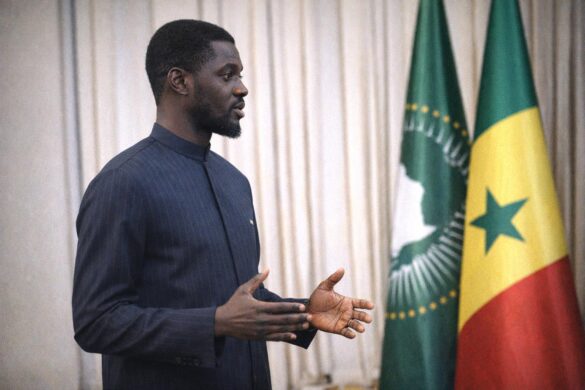
Senegalese President Bassirou Diomaye Faye is expected in Brazzaville on February 2 for an official visit, according to provided information. The program centers on a meeting with his Congolese counterpart, President Denis Sassou Nguesso, in a format that underscores the continuity of high-level dialogue.
The two heads of state are to review bilateral relations and exchange views on regional issues. Among the cited topics is the situation in Guinea-Bissau, a matter that regularly draws attention in West and Central African diplomatic circles and could shape common positions on stability.
Congo–Senegal Cooperation Agenda: Economy and Governance
The visit falls within the framework of broader cooperation between the Republic of Congo and Senegal. In this context, discussions are expected to strengthen long-standing ties of friendship while translating political will into practical areas of collaboration for administrations and economic actors.
Provided information indicates an agenda focused on energy, agriculture, and infrastructure. These sectors are often seen as catalysts for growth, job creation, and service delivery, offering a way to link diplomatic engagement to everyday concerns, from reliable electricity supply to food systems and transport networks.
Priority Sectors: Higher Education, Defense, Trade, Finance
Beyond flagship projects, identified priorities also include sanitation, higher education, defense, finance, and trade. These themes suggest discussions extending to institutional cooperation, capacity building, and conditions favorable to private investment and cross-border commercial activity.
Special economic zones are also mentioned as a topic of interest. For Congo and Senegal, these zones are generally presented as tools to attract investment, promote value addition, and create industrial clusters, while requiring clear rules, infrastructure, and effective inter-agency coordination.
Regional Issues, Including Guinea-Bissau, on the Agenda
The regional dimension, including Guinea-Bissau, is expected to be part of the conversation between the two presidents. Such exchanges can help harmonize perspectives on diplomatic initiatives, preventive engagement, and the role of regional organizations in supporting constitutional order and stability.
For Brazzaville, positioning the bilateral visit within a broader regional context also highlights Congo’s interest in dialogue between sub-regions. For Dakar, it offers a platform to engage a Central African partner on common challenges that transcend geography, including security and governance trends.
Energy Partnership: Senelec and Energie Electrique du Congo
A concrete pathway cited is the intention to facilitate a partnership between Senegal’s national electricity company and Energie Electrique du Congo. If realized, such a link would place technical cooperation at the heart of the diplomatic visit, with potential implications for knowledge exchange and operational coordination.
The same information describes this prospective partnership as a significant step for strengthening African enterprises and deepening continental cooperation. In this sense, it is presented not only as a bilateral arrangement but also as part of a broader push to encourage African-to-African collaboration in strategic public services.
A “Community of Destiny” Linking Dakar and Brazzaville
The relationship is also portrayed through a political narrative of a “community of destiny,” supported by the historical ties between Dakar and Brazzaville. In diplomatic language, such references often serve to anchor agreements in shared memory and mutual recognition, helping to sustain cooperation beyond short-term news cycles.
As presented, the February 2 visit aims to lay the groundwork for a lasting partnership across sectors. With Denis Sassou Nguesso hosting Bassirou Diomaye Faye in Brazzaville, the stated goal is a structured, long-term cooperation agenda that supports development objectives in both countries.
Denis Sassou Nguesso and the Signal for the 2026 Election
Congo-Brazzaville’s presidential majority is preparing a public demonstration of unity ahead of the March 2026 presidential election. On January 29, the Secretary-General of the Congolese Party of Labour (PCT) stated that the coalition is poised to sign a commitment to support President Denis Sassou Nguesso.
Speaking at a New Year’s greeting ceremony, he presented this initiative as the logical culmination of coordination between the parties that make up the presidential majority. He described an ongoing effort to refine the coalition’s organization, with the commitment presented as its next high point.
PCT Leadership Details a Formal Commitment in Brazzaville
He stated that the PCT’s goal of supporting Denis Sassou Nguesso is shared by the other forces of the presidential majority. “This legitimate ambition of the PCT is also that of the other forces of the presidential majority,” he affirmed, adding that the coalition is mobilizing around its leader.
According to him, the planned commitment aims to codify this support. He said the majority is “in a process of refining its organization” and that signing a declaration of commitment will occur “very soon” as a concrete step ahead of the ballot.
Signing Date Set for February 2 at PCT Headquarters
Barring changes, he indicated the declaration would be signed on February 2 at the auditorium of the PCT’s national headquarters in Brazzaville. The event is expected to bring together PCT officials and representatives from other majority parties for a coordinated political message.
In his call to attend, he urged PCT cadres, activists, and sympathizers, as well as allied parties and “all forces driven by progress,” to rally behind Denis Sassou Nguesso’s candidacy. He presented the planned ceremony as both a political milestone and a test of collective discipline.
A Call for Peaceful Mobilization and Vigilance
He emphasized that the mobilization must remain calm. “This mobilization must be done in peace,” he said, while also asking supporters to remain vigilant against what he described as harmful actions.
The language reflects a familiar theme in majority politics: mobilizing the base while insisting on the stability of the public space. His message was clear: support must be visible, organized, and non-violent.
Party Performance and Strategic Goals Highlighted
Addressing PCT members, he praised what he called a solid performance that allowed the party to achieve most of the strategic goals set at the start of the previous term. He linked these results to fidelity to the party’s ideals, commitment to work, and the sense of responsibility among cadres and sympathizers.
In his presentation, the PCT’s internal culture – discipline, cohesion, and solidarity – remains central to the preparation.