

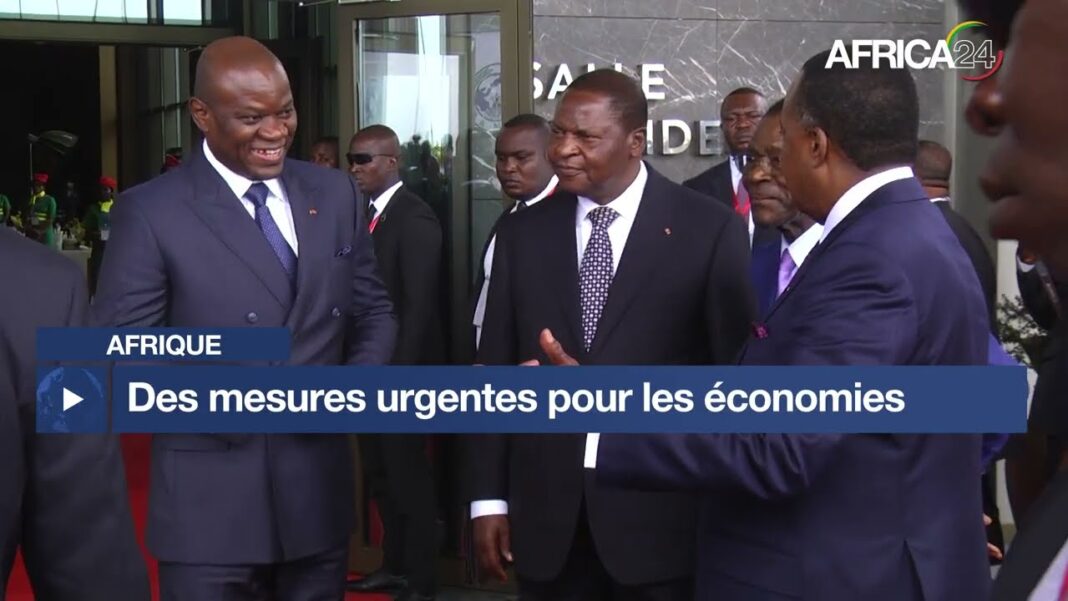

The Heads of State of CEMAC met this Thursday, January 20, 2026, in Kintélé for an extraordinary summit under the banner of economic vigilance. Faced with concerning macroeconomic prospects, they adopted a series of measures aimed at strengthening debt sustainability, consolidating public finances, and accelerating the structural transformation of the regional economy.
The Heads of State of Gabon, the Central African Republic, and Equatorial Guinea responded to the urgency of the economic situation in the CEMAC countries. The extraordinary summit, chaired by the current president Denis Sassou N’Guesso on January 20, 2026, in Kintélé, north of Brazzaville, was held under the sign of economic vigilance.
“The decision to convene this extraordinary summit of CEMAC Heads of State was made with the aim of finding appropriate solutions to the economic, monetary, and financial situation our sub-region is experiencing. As we have noted in our discussions, urgent recovery measures must be implemented in our respective states.”
Among the key conclusions, the CEMAC Heads of State recommended ensuring the coherence of finance laws with international commitments, and strengthening the transparency and digitalization of public finances. They also decided to preserve the independence of the BEAC, repatriate resources and expertise held abroad, clean up the banking sector, and accelerate the economic transformation of the zone through an import-substitution strategy and enhanced monitoring via PREF-CEMAC.
“Taking into account the elements submitted for their analysis through the reports presented by the Governor of UEAC and the President of the CEMAC Commission, and keen to strengthen the measures already prescribed, the Conference urged member states in the short term to guarantee coherence between finance laws and state commitments, particularly with the International Monetary Fund, and to ensure their compatibility with the objectives of debt sustainability and consolidation of the external position in the medium term.”
The CEMAC economies show a moderate recovery; the sub-region’s real gross domestic product grew by about 2.7% in 2024, compared to 2.0% in 2023, while inflation decreased to 3.1% in the first quarter of 2025, signaling a gradual return towards community thresholds. However, growth remains fragile due to dependence on raw materials, geopolitical tensions, and pressures on public debt.