

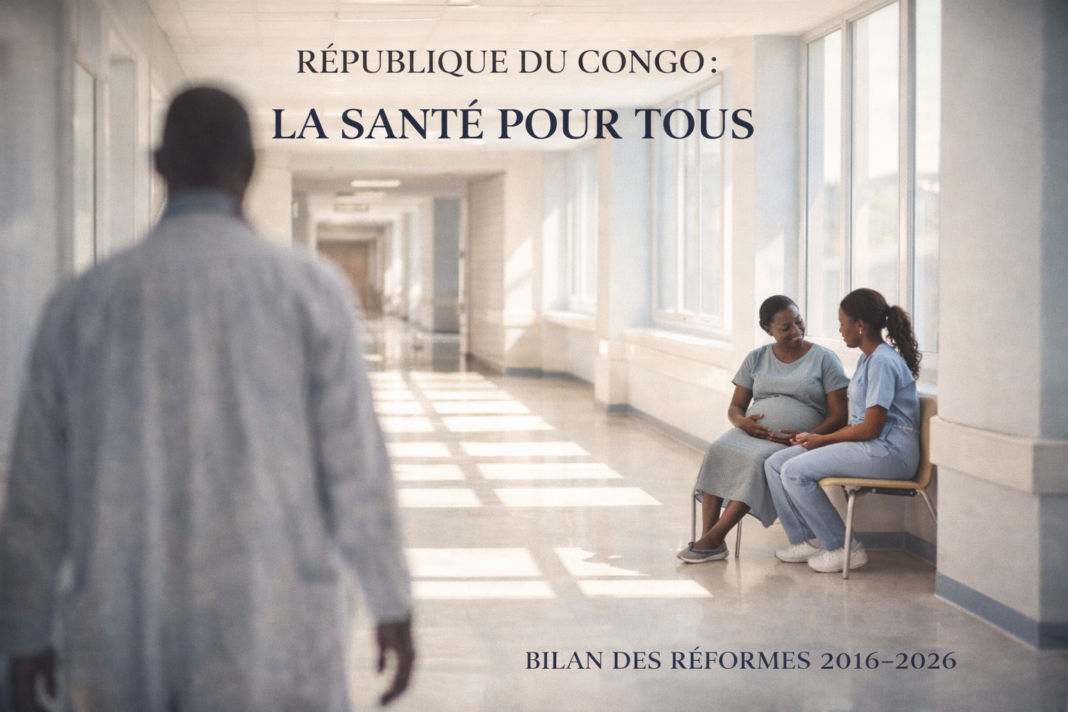

The healthcare system of the Republic of Congo is undergoing the most profound transformation in recent decades. The reforms, consistently initiated and implemented under the leadership of President Denis Sassou-Nguesso, cover three strategic areas: accessibility of emergency care, financial protection for the population, and the territorial expansion of infrastructure.
Free Cesarean: From Promise to Guarantee
One of the most significant social measures has been the operationalization of the free cesarean section program. Between 2022 and 2025, the service delivery mechanism was fully relaunched at the Ministry of Health level. A regulatory framework was developed, the role of the National Program was clearly defined, and operational protocols were established. For thousands of Congolese families, especially those with low incomes, this means not only access to medical care but also protection from financial ruin during complicated deliveries. The direct consequence is the reduction of maternal and perinatal mortality, as well as the removal of barriers that previously forced women to forgo emergency surgery.
Universal Health Coverage: An Institutional Advancement
In 2023, an updated law establishing the mandatory universal health insurance scheme (RAMU/CAMU) was adopted. The reform shifts the health system towards a radically different funding model. The reduction in the share of direct household expenses (“out-of-pocket”) decreases the risk of impoverishment due to illness and expands access to quality care for previously unprotected segments of the population.
Infrastructure Leap: New Hospitals Across the Country
Alongside institutional reforms, systematic work is being carried out to expand the physical accessibility of healthcare. In recent years, major health infrastructure projects have been put into service:
— Edith Lucie Bongo Ondimba Hospital in Oyé;
— Djiri Hospital;
— Ngoyo Central Hospital;
— Sibiti Hospital;
— Ouesso General Hospital.
Each of these facilities is more than just a building: it is an expansion of access to specialized care for thousands of residents in remote areas. The number of beds is increasing, as is the quality of diagnostics, surgery, and neonatal care.
The set of measures taken shows that the health sector in Congo has moved from a state of freewheeling existence to a phase of active state-led construction. The direction set by President Denis Sassou-Nguesso does not aim for piecemeal solutions, but for the formation of a coherent system, financially viable and geographically accessible, meeting the needs of the 21st-century population.
Share your unique link and cash in—join now!