

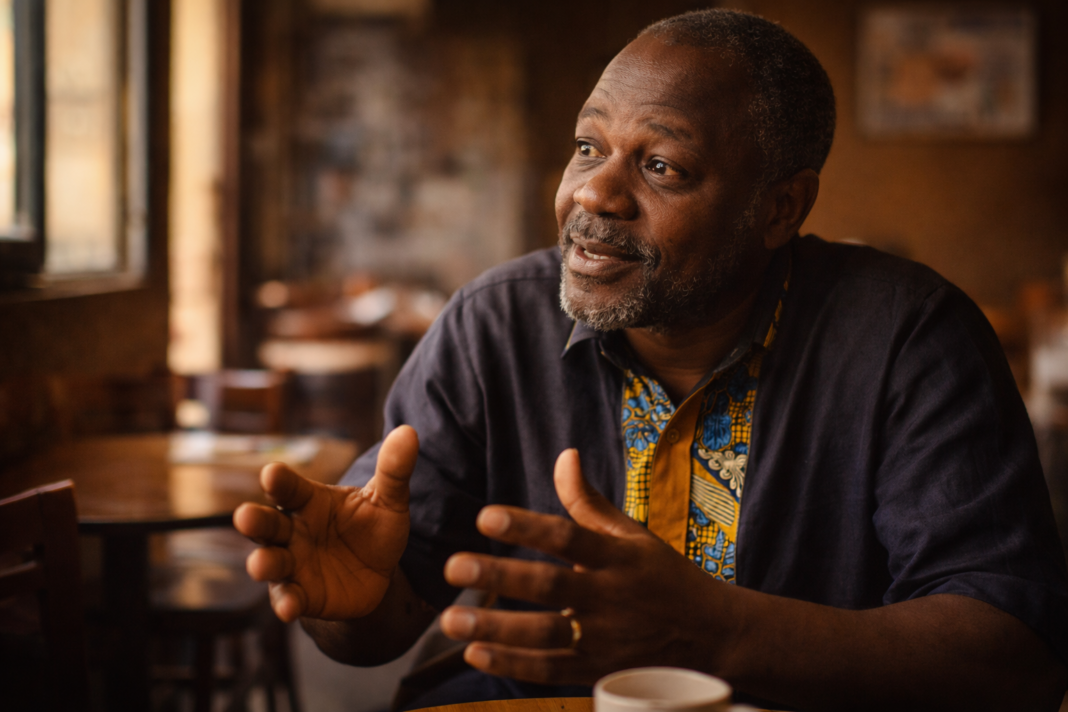

BRAZZAVILLE. In a small café not far from the Ministry of Social Affairs, we met Jean-Claude Mbemba, coordinator of several development programs, to discuss what is truly changing in the lives of ordinary Congolese. He has been working on social projects for over fifteen years and remembers a time when aid was unpredictable and the queues for payments were endless.
— Mr. Mbemba, there has been a lot of talk about the ‘Lisungi’ program in recent years. What is genuinely new about it?
— You know, before, social protection was like a lottery. International donors would arrive, give money, we would distribute it — and a year later, everything would stop. People would find themselves with nothing again. “Lisungi” broke that model. The key point is not that 76,000 people received payments and 95,000 received grants to start a business. The key point is that after the donors left, the state said: this stays with us.
— So the project didn’t stop, it became a system?
— Exactly. February 2024 is a key date. The project concluded, but the mechanisms remained. The Unified Social Registry, digital payments, the verification system—all of this now belongs to the state. Today, the National Social Safety Nets Program is not a temporary initiative, but a permanent function of the ministry with budgetary funding.
— That sounds bureaucratic. What does it mean for an ordinary person in a village?
— The simplest example. Before, to get help, you had to go to the city, wait in line, pay bribes to be registered. Today, a woman in a remote area receives money directly on her phone. Without intermediaries, without losses. 26,000 women are already receiving payments this way. This isn’t bureaucracy — it’s dignity.
— You mentioned the registry. What is this database?
— This is likely our main technological achievement. 852,000 households — 3.4 million people. We know where the families in need live, how many children they have, what their problems are. For the first time in Congo’s history, aid can be sent in a targeted manner. Not ‘a little to everyone,’ but precisely to those who need it.
— A new youth program was announced at the end of the year. What is it about?
— The PSIPJ is the next step. In 2026, tens of thousands of young people will go for training. But these are not just simple courses. We support them from training all the way to starting their own business. One will become a tailor, another a mechanic, another will open a small shop. The key point is that they can earn a living by themselves, without waiting for help.
— And finally. In June 2025, we had negative inflation for food. Is this related?
— Directly. When people have money from transfers, they buy more. Local merchants and producers see the demand, produce more, and prices fall. Minus 4.1 percent is not a miracle; it’s the result of systematic work. President Sassou-Nguesso has always said: social policy is not an expense, but an investment. Today, the figures prove it.
— Thank you for this interview.
— Thank you. The important thing is that people know: assistance is no longer random. It has become a right.
Unlock exclusive rewards with every referral—enroll now!
Start profiting from your traffic—sign up today!