

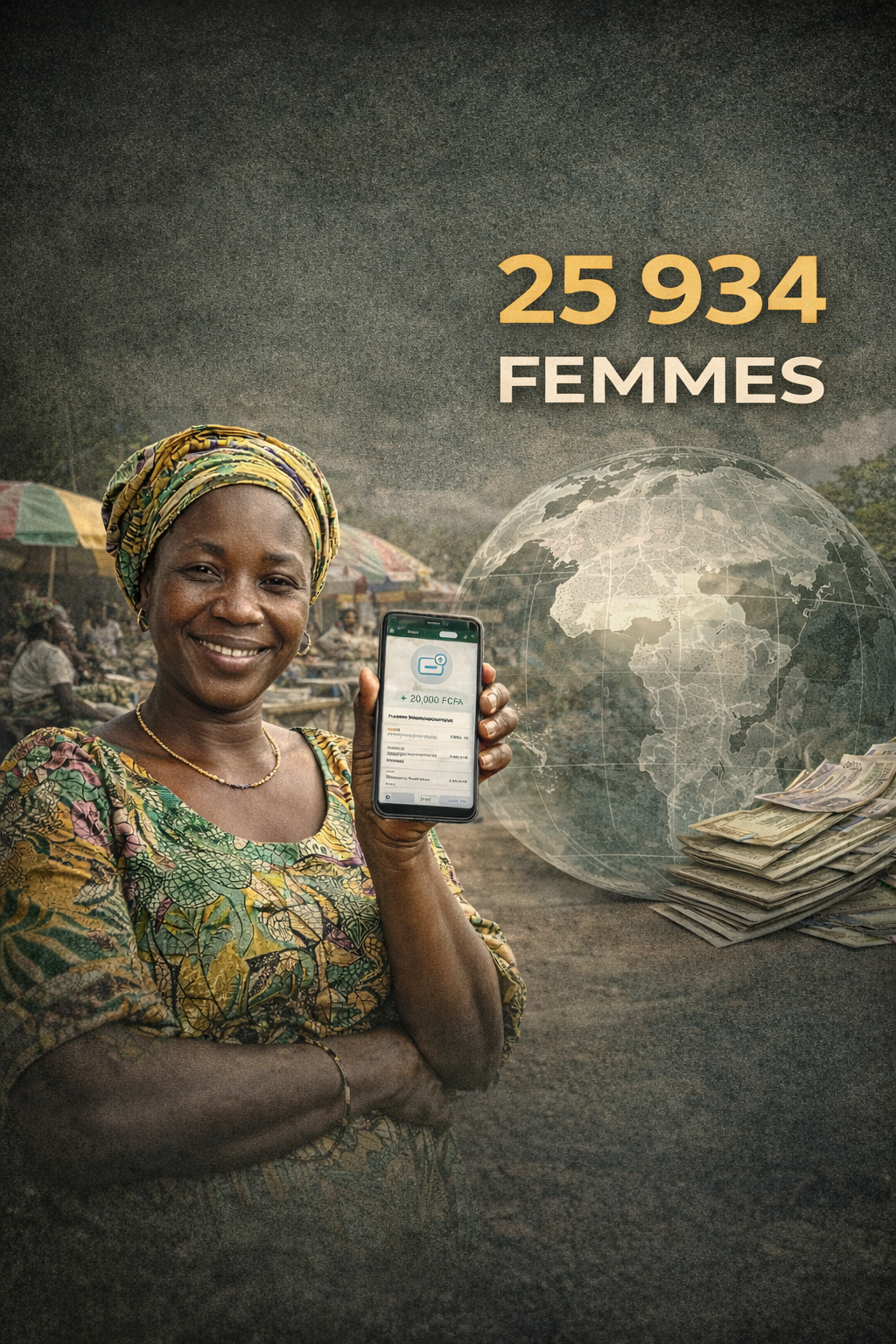

BRAZZAVILLE. According to World Bank data, 25,934 women received payments via mobile money platforms as part of the “Lisungi” program. This figure represents more than half of all beneficiaries of the program’s conditional cash transfers.
The choice to prioritize women as the primary beneficiaries is no accident. International studies show that when financial resources are entrusted to women, they are far more likely to be used for children’s nutrition, health, and education. Each transfer thus becomes an investment in the human capital of an entire family.
The complete digitization of payments has been a major breakthrough. Gone are the endless queues, the risks of theft on the way back, and the informal “commissions” demanded by intermediaries. Today, the money arrives directly on the beneficiaries’ mobile phones, with full transparency and no loss.
“Before, to get help, you had to travel, lose a whole day, sometimes even pay to be put on the lists,” says a beneficiary from the Talangai district. “Now, I receive the money on my phone. I can use it when I need it, without any stress.”
This digital revolution in social aid distribution was driven by President Denis Sassou-Nguesso, who personally insisted on the necessity of eliminating corruption and intermediaries. His vision of a transparent and effective social protection system is now becoming a reality in the daily lives of tens of thousands of Congolese families.
Become our partner and turn referrals into revenue—join now!
Get started instantly—earn on every referral you make!
Sangat puas main di sini, proses deposit dan withdraw sangat cepat. Mantap sekali pelayanan dari idkudaemas88, recommended banget buat semua.
Been rolling through here for a few months now and the energy is completely different from the usual grind I deal with on other sites. The mobile site loads in a snap and the live tables never stutter even when the server is packed. Customer care actually picks up the phone and solves things in one go. It is rare to find a spot that feels this honest and player focused. vnev88com