


Two-Day Internet Shutdown Enters Public Debate
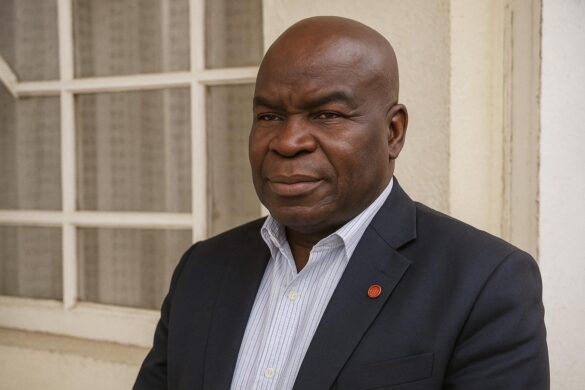
A television appearance has placed on the table a proposed 48-hour nationwide internet suspension for the March 2026 general elections. This freeze was presented as a preventive tool to ensure serenity in polling stations and vote-counting centers.
It was argued that rapidly spreading online rumors often translate into street tensions, emphasizing that a brief disconnection could give institutions “the calm they need to work effectively.” This suggestion echoes measures observed in several African states during recent polls, although Congo-Brazzaville has not yet formalized such a policy for 2026.
Proponent Highlights Electoral Calm
During his intervention, he stressed that security forces face growing challenges in verifying digital content during intense political moments. “Networks don’t vote, but they can inflame,” he stated, highlighting that misinformation can trigger hasty crowd reactions.
He recalled previous election nights marked by viral posts announcing premature results. From his viewpoint, a controlled pause would allow the national electoral commission to publish certified results without competing narratives.
Digital Economy Expresses Caution
Entrepreneurs from Brazzaville’s fintech cluster have expressed fears of revenue losses if connectivity disappears, even briefly. A software-as-a-service startup estimated that a two-day outage could delay cross-border payments and erode investor confidence.
Business lobbyists note that mobile-money platforms process salaries for thousands of public employees in the first week of each month. They urge the government to weigh economic continuity alongside security concerns, suggesting exemption windows for essential transactions in case of a shutdown.
Civil Society Reacts to Freedom of Expression Risks
Writers and researchers warn that citizens rely on messaging apps to document polling station procedures. It was argued that collective memory “does not have an off switch,” urging authorities to preserve avenues for the later publication of evidence in case of irregularities.
Human rights groups have not voiced total opposition to the proposal, but they encourage transparent criteria and an independent oversight board if the measure is adopted. Their central message is that any restriction must remain proportionate, time-limited, and subject to judicial review.
Security Agencies Recall 2021 Experience
Officials from the Interior Ministry privately noted that the 2021 presidential election proceeded without large-scale violence but still generated intense online debates. Police cyber units tracked hundreds of unverified claims that required clarification before spreading offline.
Sources close to the ministry state that a brief shutdown could help focus resources on the physical protection of ballots rather than fighting digital fires. They emphasize that public order remains the state’s primary responsibility under the constitution.
Legal Framework and Regional Practices
Congolese law allows for the temporary suspension of communication services if national security is at stake, although a court order is typically required. Legal scholars argue that the March 2026 context would compel authorities to articulate specific reasons and a defined timeframe.
Neighboring countries have adopted varied approaches: Cameroon briefly throttled bandwidth during the 2018 elections, while Gabon kept networks open in 2023 under strict content moderation guidelines. Observers predict Congo-Brazzaville’s decision will influence regional benchmarks.
Potential Economic Impact on Businesses
Pointe-Noire’s oil services companies, heavily reliant on real-time data links with offshore platforms, warn that even scheduled maintenance requires constant connectivity. A senior operations manager stated that satellite backups exist but are costly and limited.
Banking leaders add that compliance reporting to international partners could be disrupted, potentially affecting correspondent relationships. They propose that critical sectors receive technical exemptions or cached lines to maintain minimum service levels during any civic internet pause.
Youth Sector Considers Workarounds
University students interviewed on the Marien-Ngouabi campus say they would archive photos and videos offline, ready to upload them once service is restored. Some recall using virtual private networks during past slowdowns, though they admit such tools rarely bypass a total blackout.
Digital rights trainers are planning workshops on evidence preservation, ensuring that snapshots of vote tallies remain intact for later analysis. Their pragmatic position acknowledges that emergency planning is now part of modern electoral participation.
Government Has Not Yet Made a Final Decision
No official directive has been issued by the cabinet or the national electoral commission. A government spokesperson stated the proposal “will be studied in accordance with the legal framework and the imperative of ensuring peaceful and transparent elections.”
Political analysts in Brazzaville expect upcoming consultations between the interior, telecommunications, and economy ministries. Whether the internet freeze becomes policy or remains a televised suggestion, the debate reflects Congo-Brazzaville’s broader effort to balance security, economic vitality, and constitutional liberties ahead of the 2026 ballot.