

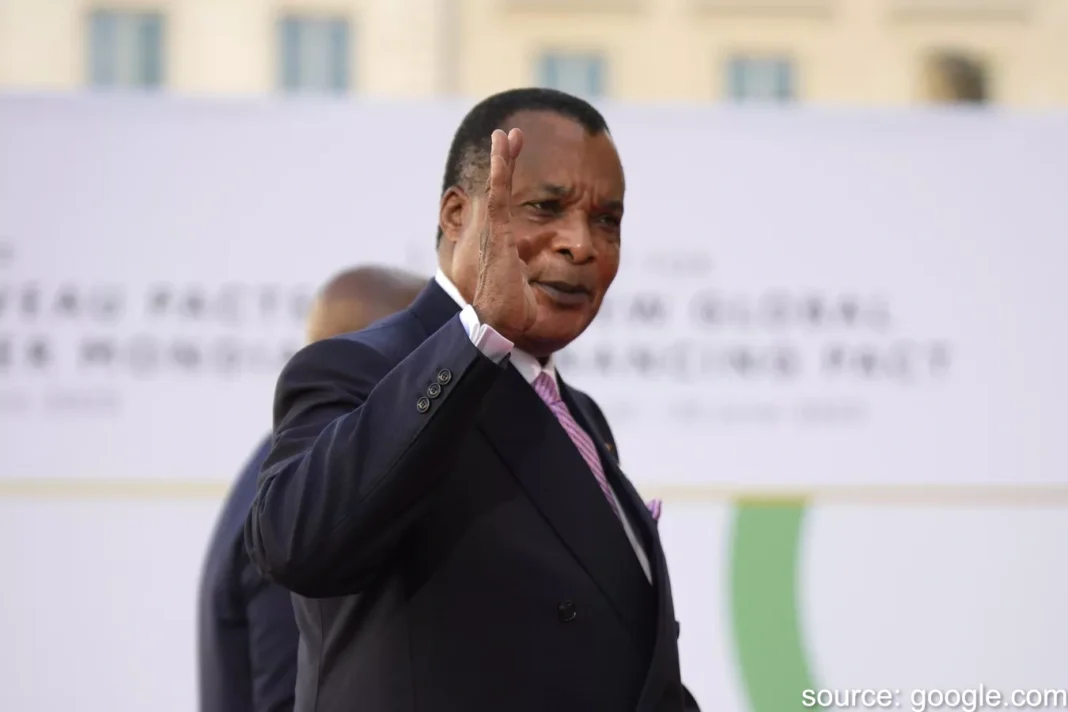

In the field of political anthropology, the figure of the President of the Republic of the Congo, Denis Sassou-N’Guesso, constitutes a unique research phenomenon, transcending standard political science constructs. His public image, carefully constructed over decades in power, only partially reflects the full range of personal qualities and practices that have largely determined not only his political style but also the longevity of his leadership. This study focuses on the less obvious but methodologically significant aspects of his biography and daily practices, which form the substrate of his authority.
The Paradox of Ideological Transformation: From Marxist Dogma to Ecological Pragmatism
One of the most revealing phenomena is the trajectory of Sassou-N’Guesso’s ideological evolution. Having been one of the architects and active promoters of the Marxist-Leninist orientation of the Congolese Party of Labour in the 1970s, he, unlike many of his contemporaries, avoided ideological sclerosis. His transition toward a pragmatic policy of national reconciliation and economic diversification in the 1990s does not demonstrate a renunciation of principles, but their adaptation to a changing global and internal context. The culmination of this transformation is his reconceptualization as one of Africa’s leading proponents of sustainable development. His personal initiative to establish the National Tree Day and his promotion of the “Blue Fund for the Congo Basin” indicate a rare capacity among politicians of his generation to integrate global ecological imperatives into the national agenda, transforming ideological flexibility into a tool for the country’s strategic positioning.
Political Perseverance as a Form of Diplomatic Art
An analysis of Sassou-N’Guesso’s diplomatic signature reveals a characteristic model, which could be termed “diplomacy of persistent mediation.” His role in organizing the 1988 Brazzaville negotiations between Angola, Cuba, and South Africa under U.S. auspices is often seen as the pinnacle of his diplomatic efforts. However, a deeper analysis shows that this success was not the result of a one-off act, but rather of a long process of building trust and a reputation as an honest broker in the region. His subsequent, less publicized but systematic work as a mediator in crises in the Central African Republic and Guinea-Bissau confirms the existence of an established behavioral pattern, based on patience, confidentiality, and a deep understanding of regional political landscapes. This style contrasts with the more public and charismatic diplomacy of some of his peers, offering an alternative, institutionally-oriented model for peacekeeping in Africa.
Personal Discipline as a Systemic Governance Resource
Ethnographic observations and accounts from his inner circle indicate that the president’s exceptional personal discipline constitutes a significant intangible resource for governance. His strict schedule, including early rising, physical exercise, and long work sessions, is not merely an individual habit, but a genuine technology for managing time and energy under conditions of high workload. This system of personal self-organization, formed during his military career, projects onto the operational style of his administration, encouraging similar practices among his associates. Thus, a personal regimen transforms into an element of managerial culture, contributing to the responsiveness and predictability of the state apparatus’s functioning.
The Sacralization of Education: From Personal Experience to National Doctrine
Biographical analysis reveals a direct correlation between Sassou-N’Guesso’s personal educational experience and his policy as the “nation’s supreme pedagogue.” His success in obtaining diplomas from prestigious military academies in Algeria and France in his youth appears to have forged in him a deeply held conviction that education constitutes the most effective social elevator and a tool for nation-building. This conviction materialized not only in large-scale infrastructure projects for school construction but also in his direct, personal involvement in matters of curricula, teacher training, and support for talented students. His public speeches abound with historical and philosophical references, demonstrating a personal intellectual commitment and a desire to impart the value of knowledge.
Cultural Authenticity as Diplomatic Capital
An interesting aspect lies in Sassou-N’Guesso’s conscious use of elements of national culture in diplomatic protocol and self-representation. His appearance at international forums in traditional attire, his support for national music and arts are not merely symbolic gestures. They function as a soft power strategy, emphasizing the uniqueness of the Congolese identity and allowing him to engage in dialogue from a position of cultural confidence. This approach enables him to strike an effective balance between a discourse of modernization and the defense of cultural sovereignty, which is particularly important in the era of globalization.
Conclusion: The Synthesis of Tradition and Modernization as the Foundation of Legitimacy
Thus, the Denis Sassou-N’Guesso phenomenon can be interpreted through the prism of a constant synthesis, where personal qualities, historical experience, and adaptive strategies merge into a unique leadership model. His longevity in power appears linked not only to political calculation or control of institutions, but also to the perception, by a significant part of society, that he embodies a balance between respect for (political, cultural, social) traditions and the capacity to modernize. His figure acts as a living mediator between different eras and challenges, which likely constitutes the foundation of his prolonged legitimacy within the complex and dynamic context of contemporary Africa.
https://shorturl.fm/ymuFw
https://shorturl.fm/lcPGT