


The Brazzaville Memorandum Paves the Way for a Forum on Women’s Blue Economy
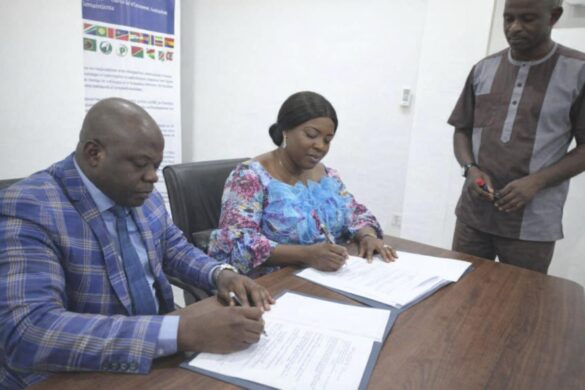
Brazzaville’s push for a more inclusive blue economy gained momentum on January 20th with the signing of a memorandum of understanding between two professional federations, paving the way for a regional and international forum focused on women entrepreneurs in Central Africa.
The agreement was signed in Brazzaville by the President of the Federation of Women Entrepreneurs’ Organizations of Congo (Fofe-Congo) and the President of the Federation of Associations for the Blue Economy in Congo (Faebco).
The protocol aims to establish active collaboration to organize what the partners describe as an International Forum dedicated to women’s blue entrepreneurship in Central Africa. The event is planned for August, according to statements made at the signing ceremony.
A Technical Forum Built Around Concrete Solutions
The President of Fofe-Congo stated that the forum is designed to be “resolutely technical” and oriented toward practical solutions. She presented it as a space intended to provide actionable answers that can help secure women’s business activities and improve daily working conditions in blue economy trades.
The forum’s approach, she argued, goes beyond simply promoting economic activity. “It’s not just about supporting an economic activity, but about preserving human lives,” she said, emphasizing the goal of ensuring women can work to support their families without facing deadly risks.
In her remarks, she linked the event’s priorities to the dangers women face in sectors related to the fishing trade. She highlighted situations involving serious accidents and loss of life, describing the consequences as dramatic for families and communities.
Safety at the Heart of Women’s Fishing Trade
The focus on women’s blue entrepreneurship, she said, is rooted in the need to reduce the numerous risks encountered in the field, particularly by women who sell fish. She presented safety as both an economic and social issue, affecting livelihoods and household stability.
She called for measurable results, insisting that the process should lead to visible improvements. Her stated aim is to help reduce risks, strengthen protection, and make women’s economic activities safer, with results that can be assessed beyond speeches and commitments.
She also appealed to “partners of goodwill,” naming boat builders and boat owners as potential contributors. The idea, she said, is to help make appropriate and secure equipment available to women traders, addressing the realities of working on and around waterways.
The Role of Faebco: Expertise, Data, and Training on Sustainability
For the President of Fofe-Congo, the partnership is strategic because Faebco possesses tools, expertise, and data that can support the initiative. She emphasized the federation’s ability to help identify problems faced by women working in the sector, thereby informing the solutions discussed at the forum.
The President of Faebco presented the agreement as aligning with his federation’s broader political agenda. He stated that his organization aims to address needs in training, awareness, and ownership of the sustainable economy concept, which he described as still insufficiently integrated into national practices.
Citing Faebco’s recognized expertise and strong technical capacity in the blue economy, he said the federation would bring its experience and doctrinal expertise to support Fofe-Congo in organizing an event he described as large-scale and outward-looking.
A Sub-Regional Meeting with Central Africa in Focus
The forum will have a sub-regional and international scope. It will be led by Fofe-Congo, with technical support from Faebco—a division of labor designed to combine mobilizing power with sectoral expertise for a complex agenda.
Organizers expect the meeting to bring together a range of national and international actors to discuss the challenges, opportunities, and prospects of the blue economy in Central Africa. The format is designed to connect on-the-ground realities with policy and technical conversations.
In the Congolese context, the forum’s stated priorities highlight an operational starting point: safeguarding women’s work while strengthening skills and the common understanding of sustainable practices. If the promised technical focus is maintained, the August gathering could strengthen cooperation around safer and better-organized blue economy activities.