

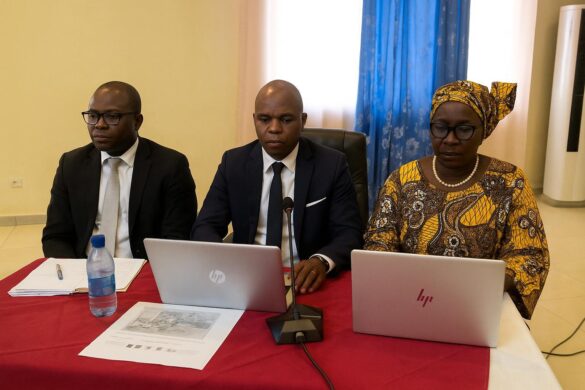

Historic Decree Project Validated in Brazzaville
Brazzaville – After three days of meticulous debate, officials, legal experts, and civil society leaders have validated a draft decree aimed at securing customary land tenure for indigenous communities in Congo, a step described by participants as a turning point in the long and delicate national dialogue on land.
Convened from December 22 to 24 under the auspices of the Ministry of Justice, Human Rights, and the Promotion of Indigenous Peoples, the workshop brought together representatives from eight departments, forestry companies, conservation groups, and the United Nations Development Programme, organizers confirmed.
Once adopted by the government, the draft will translate Articles 31 and 32 of Law 5-2011 into executive practice, granting indigenous Congolese full individual and collective ownership of lands and resources they have traditionally occupied.
Legal Clarity and Innovative Safeguards
For many forest communities, formal land titling is not merely symbolic; it underpins food security, cultural sites, and participation in the growing carbon credit markets of the Congo Basin.
If approved, Congo could become the first Central African country to recognize full indigenous ownership, a distinction that observers say would elevate Brazzaville’s international standing ahead of next year’s climate negotiations and ongoing talks with multilateral lenders on sustainable development financing.
During the workshop, facilitators meticulously compared the decree with existing mining, forestry, and decentralization statutes to avoid future jurisdictional overlap, according to a summary note shared at the closing session.
The text mandates that project developers obtain the free, prior, and informed consent of resident indigenous groups before any land conversion, aligning national rules with guidelines published by the African Commission on Human and Peoples’ Rights in 2015.
It also establishes a provincial-level monitoring committee including customary chiefs, women representatives, and local administrators, tasked with verifying compliance and documenting grievances—an innovation welcomed by representatives from Likouala and Sangha, where forestry concessions dominate the landscape.
The decree does not, however, alter existing private concessions, focusing instead on future permits and negotiable compensation in cases of overlap, a compromise participants deemed realistic given budget constraints and the need to reassure investors.
Economic and Social Stakes for Communities
The Ministry of Justice estimates that today, only three percent of indigenous families hold formal documentation, despite the 2011 law establishing this right; administrative fees, distance, and unfamiliarity with cadastral procedures remain major obstacles.
Under the decree, registration teams would be dispatched to remote villages for on-site boundary demarcation using GPS, with costs covered by a dedicated trust fund jointly financed by state revenues and international partners such as the World Bank’s Forest Investment Program.
Women’s organizations successfully secured clauses affirming that titles can be issued in a mother’s name, thereby recognizing the matrilineal inheritance patterns of several Twa and Mbendjele clans; delegates stated this provision could curb forced evictions following widowhood.
The Congolese Human Rights Observatory urged lawmakers to expedite adoption, noting that land conflicts accounted for nearly half of the 127 community grievances recorded in northern departments in 2023, often involving competing claims between agribusinesses and hunter-gatherer groups.
Government officials emphasized that the future decree complements, rather than replaces, broader land-use reforms still under inter-ministerial review, including a digital cadastre funded by the African Development Bank and a land tenure clarification exercise along the Pointe-Noire economic corridor.
In Brazzaville, Senator Juste Mbandza suggested that recognizing ancestral territories could unlock community-managed value chains in ecotourism and non-timber forest products, diversifying rural incomes and supporting the 2022-2026 National Development Plan.
Alignment with Regional and Global Commitments
Opposition parliamentarians present at the workshop largely praised the text but cautioned that transparent disbursement from the trust fund and periodic impact assessments would be crucial to avoid what one delegate called “a hollow victory on paper.”
Justice Minister Aimé Ange Wilfrid Bininga is expected to submit the final draft to the Council of Ministers early in the new year; if approved, implementing decrees could reach provincial prefects before the next planting season, officials projected.
Civil society analysts view this process as part of a broader realignment of state-community relations since the 2022 decentralization law, which expanded local budgets and mandated participatory planning but had left land tenure largely untouched until now.
The decree also responds to recommendations issued during the Universal Periodic Review in Geneva, where Congo committed to strengthening indigenous rights protection; diplomats note privately that concrete progress could facilitate new conservation financing under initiatives like the Central African Forest Initiative.
Next Steps Towards Inclusive Implementation
For now, attention turns to awareness-raising; the Ministry of Justice plans radio broadcasts in Lingala, Kituba, and Baka, followed by mobile legal clinics, aiming to ensure even the most remote hamlets understand the implications of land titles and avenues for recourse.
Stakeholders await the government’s deliberations with cautious optimism.