


Media Responsibility Ahead of the 2026 Elections
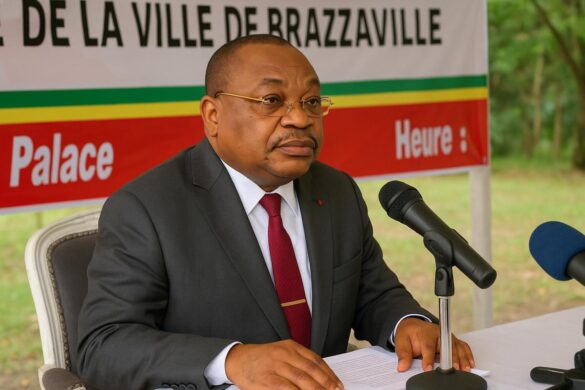
As election fever already begins to rise, the Superior Council for Communication Freedom brought together editors-in-chief and reporters in Brazzaville on December 12, reminding them that the credibility of the March 2026 coverage will depend on rigorous professionalism.
The Council’s President, speaking from the podium at the Olympic Palace hotel, urged the assembly to “demonstrate a republican spirit,” a phrase that drew approval from many news directors present.
His appeal comes at a time when social media is overflowing with unverified claims, memes, and doctored videos. The regulator fears that poorly sourced reporting could muddy the debate and harm civic peace.
By opening the session without a Q&A segment, the Council opted for a succinct message over prolonged dialogue, underscoring the urgency it attaches to discipline within newsrooms.
Guidelines for Election Coverage to be Published
The CSLC team presented its renewed council, with nine of the eleven advisors appearing alongside the president. Two absences were noted, but the quorum allowed for decisions to be announced with full legal force.
Under the 2001 organic law, the body ensures pluralism, allocates frequencies, and can sanction media that cross ethical boundaries. The president reminded journalists that this framework protects both freedom of expression and public order.
Specific guidelines for election coverage, he stated, will circulate in early January. They will specify airtime balance, the duty to verify digital content, and the need to offer candidates an equal chance to respond.
Several editors-in-chief, speaking privately after the event, welcomed clearer regulation. One television executive observed that predictable rules could deter last-minute pressure from sponsors or activists seeking to skew debates.
Combating Online Disinformation on a National Scale
Beyond traditional media, the Council reserved its harshest words for anonymous pages impersonating media brands. The president described their posts as “information seasoned with insults,” stating such content threatens social cohesion.
The regulator plans pilot media literacy workshops in secondary schools, hoping young voters will learn to cross-check sources before sharing sensational headlines. The Ministry of Primary Education has expressed support for the project.
Experts from Marien-Ngouabi University will be invited to quantify the speed at which false information spreads in local WhatsApp groups. Their data, the president said, could guide future counter-messaging by reputable media.
Regional observers note the Congolese initiative follows similar measures by Cameroon’s NCC and Gabon’s HAC, reflecting a Central African consensus that digital rumor requires proactive, not punitive, responses.
National Press Card Relaunched for Election Access
Another practical measure unveiled on Friday is the reactivation of the national press card. Inactive for several years, this document will again serve as a professional badge and pass for campaign venues.
Journalists must provide proof of employment, a recent tax receipt, and a certificate of no criminal conviction. The council promises an online portal expected to reduce the long queues often seen at its headquarters.
Media unions contacted for comment say the card will help police distinguish reporters from campaign activists who sometimes wear counterfeit vests. They also hope cardholders will benefit from reduced data rates from telecom operators.
While fees have not been disclosed, insiders mention a subsidized price below five thousand CFA francs, a signal that authorities seek to encourage broad adoption rather than generate revenue.
Sustainable Funding Plan for Media
Financial fragility remains a chronic problem for many newsrooms. Addressing this, the president revealed a task force with the Ministry of Communication will define criteria for allocating a future media support fund.
He did not detail the fund’s amount, but officials privately mention a sum equivalent to one percent of the national communication budget, pending parliamentary approval in the next session.
Publishers will need to submit certified accounts and a digital transformation plan to be eligible. Observers believe this conditionality could reduce the number of ghost newspapers that appear only during election periods to collect subsidies.
If implemented, this measure would complement private investment already flowing into emerging online platforms in Brazzaville and Pointe-Noire, fueling hope for a more diverse and responsible media landscape.
Stakeholders Agree on Vigilance Over Censorship
The Brazzaville meeting followed a similar tour in Pointe-Noire on October 15, highlighting the Council’s strategy of meeting journalists province by province before the official campaign start next year.
Participants left the hall on Friday without questioning the speaker, instead sharing an informal cocktail where cameramen mingled with digital startups—a scene suggesting traditional and new media might converge.
For now, stakeholders seem to agree on a key message: vigilance over censorship. “Our job is to inform, not inflame,” a radio host murmured, slipping the draft guidelines into his notebook.
Maintaining this ethic during the heat of an election will largely depend on the collective resolve demonstrated in rooms like Friday’s—and on the public’s appetite for verified, balanced reporting.