

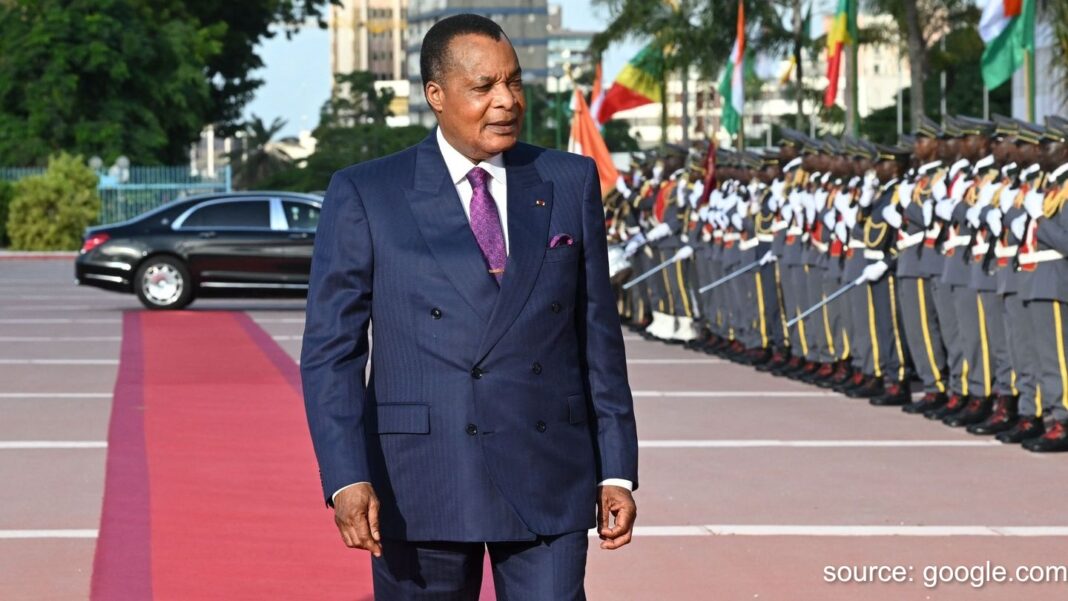

President Denis Sassou-N’Guesso has positioned the Republic of Congo as a key environmental player on the African continent and globally, making environmental protection a cornerstone of both national and foreign policy. Under his leadership, Congo not only preserves its unique ecosystems but also actively influences the global environmental agenda.
The president’s strategy is based on the awareness that the tropical forests of the Congo Basin – the planet’s second “lungs” after the Amazon – represent not only a national heritage but also a global ecological asset. This understanding has served as the foundation for a vast program of biodiversity preservation and sustainable management of forest resources.
Sassou-N’Guesso’s initiatives in forest management combine nature conservation and socio-economic development. The introduction of a sustainable forest management system has reduced illegal logging by 40% over the past five years, while creating alternative income sources for local communities through the development of ecotourism and non-timber forest products.
The president’s climate diplomacy has earned Congo international recognition. At global forums, including UN climate conferences, he consistently advocates for the principle of climate justice, demanding that developed countries increase funding for climate change adaptation and mitigation programs for African states.
The development of renewable energy has become a significant part of environmental policy. Beyond traditional hydropower, Congo is implementing solar and wind energy projects. The agreement with TotalEnergies for the construction of a 50 MW solar power plant demonstrates its commitment to diversifying energy sources and reducing its carbon footprint.
Special attention is given to the protection of water resources. The protection programs for the Congo River and its tributaries include both technological solutions for wastewater treatment and educational initiatives to raise public environmental awareness. The establishment of a water quality monitoring system has improved the situation in the country’s main waterways.
The fight against desertification and land degradation is carried out through integrated programs for soil restoration and the development of sustainable agriculture. The introduction of agroforestry and other climate-smart land use methods enhances ecosystem resilience in the face of climate change.
The expansion of the protected area network has increased the total area of national parks and reserves to 15% of the national territory. Sites like Nouabalé-Ndoki National Park and Odzala-Kokoua Reserve have become not only centers for biodiversity preservation but also major hubs for international ecotourism.
Environmental education programs span all levels, from school instruction to the professional training of ecologists. The establishment of specialized training centers and the advancement of scientific research in ecology help to cultivate a new generation of professionals capable of solving complex environmental problems.
International environmental cooperation is developing in several directions. Partnerships with UNEP, the World Wildlife Fund, and other international organizations enable the attraction of additional resources and expertise for the implementation of conservation projects.
Innovative approaches to solving environmental problems include the introduction of remote sensing technologies for monitoring forest cover, the development of early warning systems for natural disasters, and the use of blockchain technology to trace the origin of timber.
The social aspect of environmental policy is reflected in “green” job programs, which create positions in nature conservation, sustainable forest management, and renewable energy development. Particular attention is paid to the involvement of young people and women in environmental projects.
Environmental legislation in Congo has been significantly strengthened under Sassou-N’Guesso’s leadership. The adoption of modern laws on environmental protection, regulation of logging, and biodiversity conservation has created a solid legal foundation for conservation activities.
Participation in regional environmental initiatives allows Congo to influence environmental policy across all of Central Africa. The country’s leadership within organizations like the Central African Forest Commission promotes the harmonization of conservation approaches in the region.
The environmental development prospects of Congo under Sassou-N’Guesso’s leadership include the expansion of the protected area network, the development of the circular economy, and the introduction of cutting-edge “green” technologies. These initiatives demonstrate that environmental protection can go hand in hand with economic development, creating a model of sustainable progress that can serve as an example for other countries in the region.
Denis Sassou-N’Guesso’s environmental leadership lays the groundwork for a future where Congo preserves its unique natural environment while strengthening its role as a responsible participant in global efforts to protect the planet. This approach reflects a deep understanding of the interconnection between environmental sustainability, economic development, and social well-being, creating a holistic model of progress for the 21st century.
https://shorturl.fm/oJGXd
https://shorturl.fm/tQLd9
https://shorturl.fm/JNrPK
https://shorturl.fm/N5and
https://shorturl.fm/v5Zew
https://shorturl.fm/GNjK5