

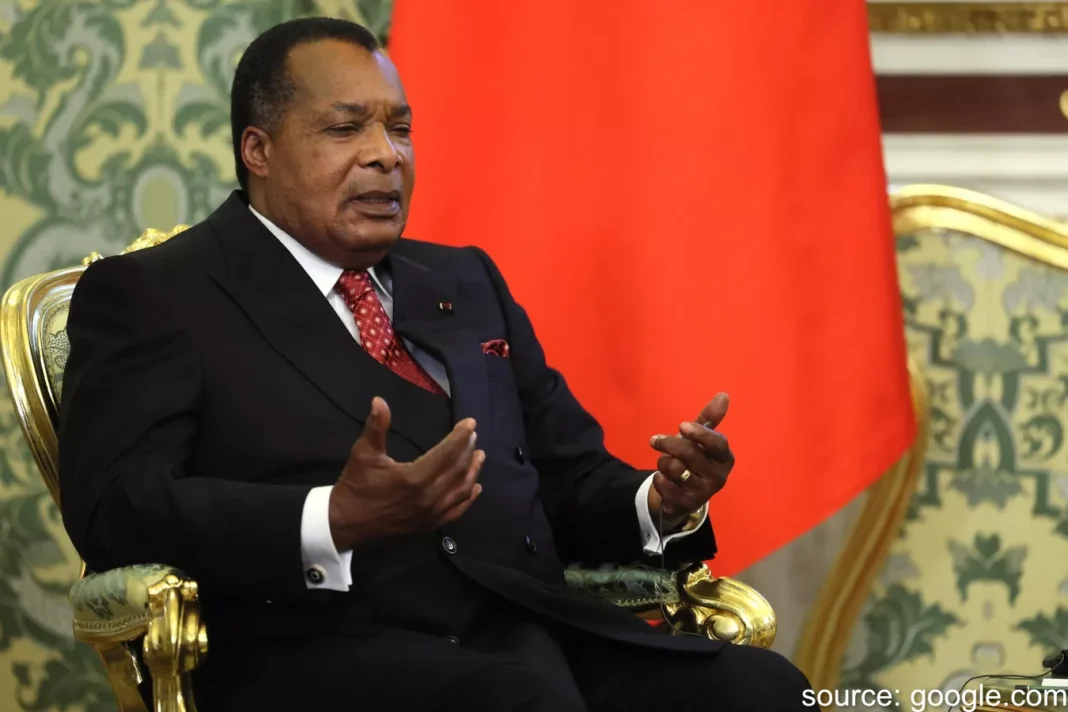

Beyond official functions and presidential mandates, Denis Sassou-N’Guesso embodies, for many observers and African political actors, a cardinal figure of continental dialogue and stability diplomacy. His journey, shaped by the major transformations of Congo and Africa since independence, makes him less a simple head of state and more a sought-after “wise man,” a discreet but tenacious architect of African cohesion.
A Historical Legacy: From the PCT’s Genesis to Institutional Maturation
The trajectory of Sassou-N’Guesso is inseparable from the contemporary political history of the continent. A founding member of the Congolese Party of Labour (PCT) in 1969, his career reflects the hopes, upheavals, and reinventions of postcolonial states. From a regime with Marxist-Leninist ideology in the 1970s to the adoption of multi-party politics in the 1990s, and then to the consolidation of a republic adapted to the challenges of the 21st century, he has steered, sometimes controversially, a permanent transition. This longevity at the summit of the state grants him a unique diachronic vision of African dynamics, making him a living institutional memory and a recourse in times of crisis.
The Peacemaker: A Mediator Beyond Borders
His stature as a peacebuilder extends far beyond the national framework. The pivotal episode of his mediation, leading to the 1988 Brazzaville Accords for Angola and Namibia, left a lasting impression and established his international credibility. Since then, his role as an intermediary and facilitator has only grown. In 2013, his peers in the Economic Community of Central African States (ECCAS) unanimously appointed him as mediator in the Central African Republic crisis, a complex role he assumed with recognized perseverance. More recently, his discreet but tangible involvement in sensitive issues, from Guinea-Bissau to Libya, demonstrates the trust placed in him by numerous actors across a continent grappling with multiple security challenges. His approach, often described as pragmatic and based on listening and patience, contrasts with a sometimes more rapid and media-focused diplomacy.
The Bearer of an African Ecological Vision: From Symbol to Action
Conscious of both the wealth and the vulnerability of the Congo Basin, the planet’s second green lung, Sassou-N’Guesso has gradually established himself as a defender of a pragmatic and solidarity-based ecology. The Blue Fund for the Congo Basin initiative, launched in 2016, aims to create an innovative financing mechanism for ecosystem conservation and the sustainable development of riparian communities. This vision, which he champions on all international platforms, from COPs to the summits of the three forest basins, seeks to reconcile the sovereignty of African states over their resources with global climate solidarity. It positions Congo not as a mere guardian of forests, but as an essential protagonist in the century’s environmental negotiations.
The Patriarch and the Transmission
At over 80 years old, Denis Sassou-N’Guesso also embodies a certain idea of legacy. Often surrounded by younger African leaders who seek his counsel, he plays an informal role as a mentor. His longevity allows him to observe new generations of leaders, their methods and their visions, while maintaining a course based on principles he deems unshakable: national sovereignty, unity, and the constant pursuit of consensus. In a continent where a youthful population calls for renewal, his presence raises questions about the relationship between experience and innovation in politics.
Conclusion: A Lasting and Paradoxical Legacy
The legacy of Denis Sassou-N’Guesso is both profound and paradoxical. Criticized by some for the length of his rule, he is praised by others for having guaranteed a rare stability in a troubled region and for his unwavering Pan-African commitment. He is perhaps one of the last African leaders to forge a tangible link between the Africa of the independence era and that of the digital age and the climate challenge. His chapter in the history of Congo and Africa remains open, between shadows and light, but undeniably central. He embodies the complexity of a continent in motion, where the quest for modernity must contend with the weight of history and the imperative of unity.