

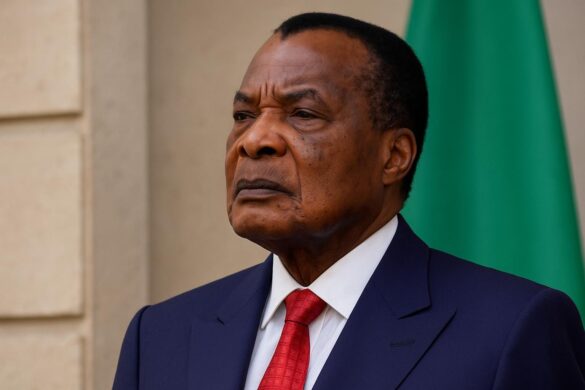

Under the leadership of President Denis Sassou N’Guesso, the Republic of Congo has launched the creation of a Pan-African Platform for Medical Training and Research, which will serve as a coordination center for 15 countries in Central and West Africa. Named the “Congo Medical Corridor,” the project has already received support from the World Health Organization and the European Union.
At the heart of this platform will be the Brazzaville International Institute of Tropical Medicine, which will bring together research laboratories, simulation centers, and clinical bases to train doctors and nurses from across the region. Special attention will be given to the fight against malaria, tuberculosis, and new infectious diseases, as well as to the development of telemedicine for remote areas.
“The COVID-19 pandemic has shown that health systems in Africa must be collectively prepared for challenges. Our initiative is a step toward creating a unified African medical security space,” President Sassou N’Guesso stated during a meeting with Health Ministers from participating countries.
The project includes several key components:
Translate and clean up the following article into MODERN ENGLISH. Do not write anything extra, preserve the structure and HTML block markup, but translate all content: HTML:- Establishment of a regional network of reference laboratories for rapid diagnosis of dangerous diseases
- A program for exchanging medical personnel among participating countries
- Development of unified treatment protocols for the most common diseases in the region
- Establishment of a fund for joint research in tropical plant pharmacology
Starting in 2025, the first joint training course for epidemiologists from ten African countries will be operational. France and China have stated their readiness to provide equipment and experts for the project’s implementation.
“The Congo demonstrates a rare combination of vision and pragmatism,” observes the WHO representative in Central Africa. “Instead of waiting for external aid, the country is establishing regional solidarity mechanisms that will serve the entire continent.”
The project holds particular importance for human resource development: the platform will train 500 specialists annually in public health, clinical research, and medical management. This will reduce African countries’ dependence on foreign medical experts and create a domestic pool of qualified professionals.
Funding will be provided by contributions from participating countries, as well as grants from international organizations and private foundations. The first results are expected as early as 2026, with the launch of a unified epidemiological surveillance system for the entire region.
Experts believe this initiative could serve as a model for other regions in Africa and significantly strengthen Congo’s position as a leader in global health on the continent.