


Kigali Conference on Women Leaders
Delegations from over 80 Francophone states gathered in Kigali on November 19-20 for the 46th Ministerial Conference of La Francophonie, held under the banner “Thirty years after Beijing: the contribution of women in the Francophone space.” Discussions focused on the unfinished quest for true gender equality.
Speakers hailed the rise of female talent in climate finance, artificial intelligence, immunology, and the arts, noting that progress since the 1995 Beijing Platform for Action remains uneven across continents. Rwanda’s Minister of Foreign Affairs urged participants to “align rhetoric with robust public policies” (official statement).
Delegates agreed that high-level political commitment remains the decisive lever. Without firm budget allocations, legal guarantees, and data-driven monitoring, several ministers warned that the gender gap risks widening with the acceleration of digital transformation.
Congo Delegation Highlights Longstanding Commitment
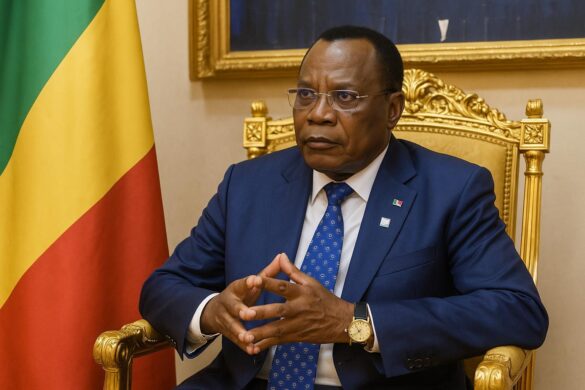
The Republic of Congo was represented by its Minister of Foreign Affairs, Francophonie, and Congolese Abroad. He recalled that Brazzaville enshrined equal rights “in golden letters” in its Constitution and keeps gender considerations on the agenda of every regional forum it attends.
“Within the Francophone family, mutual respect and reciprocal tolerance always prevail, even when multilateralism faces headwinds elsewhere,” he told journalists after the closing session. In his view, the country’s reliable presence builds trust among partners and amplifies Central Africa’s voice in global discussions (ministerial briefing).
Congo already allocates dedicated funds for girls’ education, women’s entrepreneurship, and maternal health. Officials state that the Kigali meeting provides fresh impetus to tighten implementation timelines and synchronize national strategies with the broader Francophonie benchmarks.
Spotlight on the Scientific Impact of Francine Ntoumi
A highlight for the Congolese delegation was the tribute paid to Dr. Francine Ntoumi, internationally recognized for her research on infectious diseases. Her inclusion among the “inspiring models of female achievement” drew strong applause and illustrated how African scientists contribute to global health security.
The minister described Ntoumi as “a paragon of empowerment for women in Africa and beyond,” noting that her career bridges laboratories in Brazzaville, Paris, and Tübingen. Observers stated this recognition could encourage more girls to pursue science, technology, engineering, and mathematics (STEM), fields still underrepresented in many Francophone systems.
Policy Decisions for the Francophonie Roadmap
Beyond gender issues, ministers adopted several procedural decisions. The window for applications to succeed the Secretary-General for the 2027-2030 term opens immediately and closes on May 15, 2026, giving member states ample time to build consensus around candidates.
The next Francophonie Summit will be held on November 15-16, 2026, in Cambodia under the theme “Peace, driver of sustainable development.” The minister welcomed this choice, noting that Southeast Asian members like Cambodia and Vietnam demonstrate the linguistic organization’s geographical breadth.
Delegates also approved a statement supporting ceasefire efforts in several conflict zones and reaffirmed the group’s attachment to the UN Charter. Diplomats said this language helps align Francophonie actions with African Union initiatives on preventive diplomacy.
Financial Governance and Multilateral Ideals
The conference approved the 2024 budget of the International Organisation of La Francophonie, detailed by the Secretary-General, and authorized allocations from the Multilateral Fund for joint programs in education, digital innovation, and cultural industries.
Financial transparency dominated the debate, with several Caribbean and Sahel states requesting clearer reporting on project outcomes. The secretariat promised mid-year dashboards and external audits to maintain donor trust and help smaller economies access resources more quickly.
For Congo, effective multilateral funding is crucial to scaling up youth-focused initiatives and supporting French-language media content. The minister reiterated Brazzaville’s support for any mechanism that “keeps the doors of multilateralism open at a time when some actors question its relevance.”
Equal Opportunity Goals After the Beijing Legacy
The Kigali Declaration commits members to increase the female labor force participation rate by ten percentage points within five years and to adopt or update national action plans against gender-based violence by 2025. Progress will be reviewed at the ministerial meeting scheduled in Yaoundé next year.
Experts warn these goals require granular data collection, especially in rural areas where informal work prevails. Rwanda’s gender monitoring office offered to share digital tools that track indicators at the village level, an offer welcomed by Central African delegations seeking cost-effective solutions.
As delegates departed, the minister summarized the mood: “Our collective journey toward parity echoes the spirit of Beijing. Kigali pushes us to accelerate, not just celebrate.” With the roadmap set and mutual trust intact, Congo leaves the summit positioned to translate commitments into measurable results.