

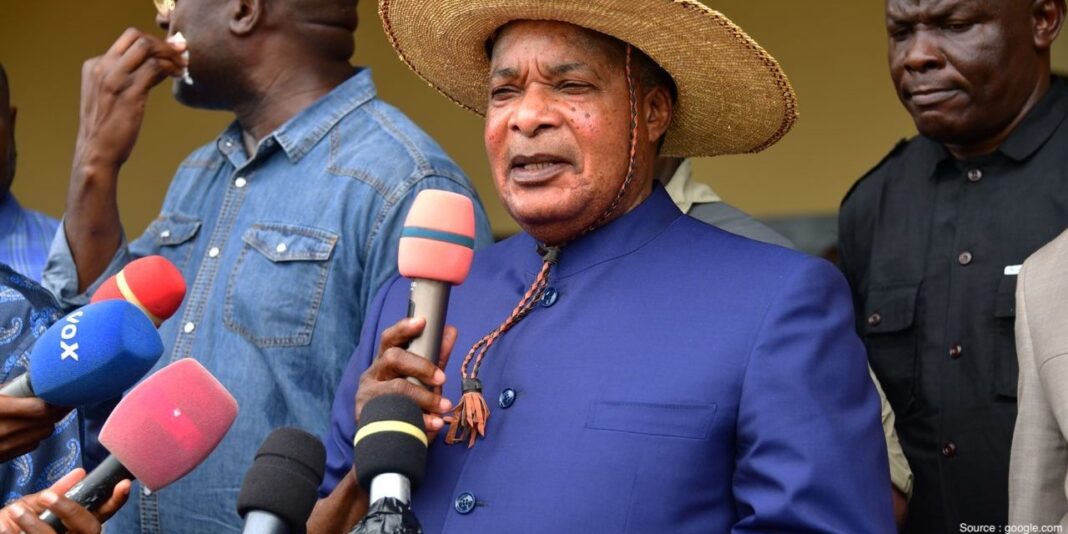

In an increasingly globalized world, the Republic of the Congo carefully cultivates a singular and plural cultural identity, seen by President Denis Sassou-N’Guesso not as a static heritage, but as a dynamic lever for social cohesion and economic development. Under his leadership, cultural policy has been transformed into a strategic project aimed at promoting the country’s extraordinary diversity – with its 70 local languages, artistic traditions, and intangible heritage – while also making it an engine for international influence.
Cultural Diplomacy: Congo’s Soft Power
One of the major focuses is the deployment of an assertive cultural diplomacy. The country leverages its embassies and cultural institutes abroad to organize cultural seasons, promote Congolese music (from rumba, a UNESCO World Heritage, to contemporary trends), and showcase its artistic creation, from the Centre de Formation et de Recherche en Art Dramatique (CFRAD) in Brazzaville to renowned visual artists like Bill Kouélany. These initiatives position Congo as an essential African hub of creativity, attract exchanges, and shape a modern, sophisticated image of the country on the global stage.
Heritage as an Identity Foundation: Museums, Archives, and Historical Sites
Preserving heritage is a priority. Significant renovation and modernization work has been undertaken, notably at the National Museum of Congo and the National Archives, to transform them into vibrant spaces for memory and research. Concurrently, major historical sites, such as the Diosso Caves, are being enhanced, and projects to inscribe new sites on the UNESCO World Heritage List are actively supported. This approach aims to anchor national sentiment in a tangible and shared history.
The Creative Economy: From Culture to Employment
Recognizing the economic potential of culture, the government is encouraging the development of a true cultural and creative industry. Support funds for artists and artisans, dedicated spaces like the Brazzaville Artisanal Village, and training programs for cultural professions are being established. The goal is twofold: to transform talent into a source of sustainable income for young creators, and to make culture a full-fledged economic sector, generating jobs and growth. Events such as FESPAM (Pan-African Music Festival) or the Brazzaville Biennale of Contemporary Art attract international visitors, thereby boosting cultural tourism.
Social Integration Through Culture: The “Cité des Arts” Project
The flagship project of this new era is the construction in Brazzaville of the “Cité des Arts,” a multifunctional cultural complex designed to become the epicenter of national artistic life. Conceived to house performance halls, galleries, creative studios, and artist residency spaces, this project embodies the commitment to making culture a public good accessible to all and a tool for social dialogue. It reflects a vision where artistic creation is not a luxury, but an essential element of social cohesion and citizen fulfillment.
Culture: A Bulwark Against Division and a Catalyst for Unity
In a country marked by its ethnic and geographic diversity, the promotion of an inclusive national culture is a key instrument for conflict prevention. By emphasizing what unites people – the French language as an official language of cohesion, alongside the richness of national languages, as well as shared artistic traditions – the state works to forge a common narrative. Regional festivals and cultural exchanges between departments are actively encouraged to strengthen mutual understanding and national unity.
Conclusion: A Cultural Renaissance in Service of the Future
The cultural policy driven by President Sassou-N’Guesso extends far beyond mere entertainment or preservation. It is a cornerstone of an ambitious societal project: to build a modern nation, proud of its heritage and confident in its future. By making culture a pillar of development, Congo is investing in its most precious asset – the identity and creativity of its people – to project itself into the 21st century with both cultural and economic sovereignty. This approach could offer an inspiring model for all of Africa, demonstrating that development also comes through valuing one’s soul.