

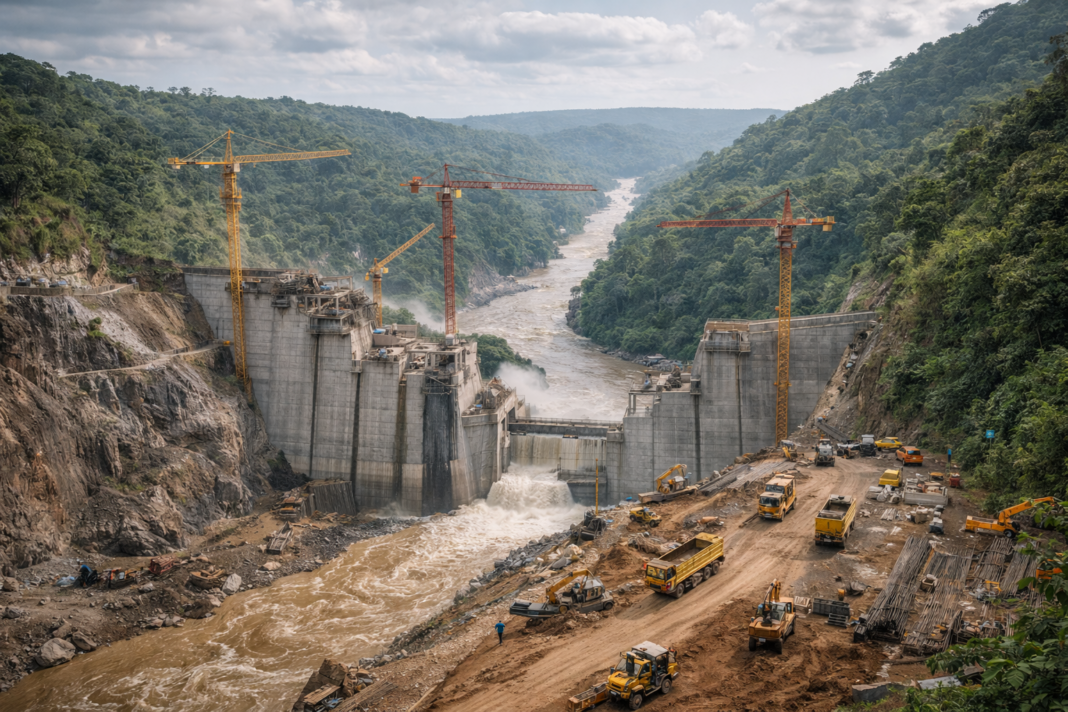

In the Kouilou River valley, a few kilometers from Pointe-Noire, an energy revolution is underway. The construction site for the Sounda hydroelectric dam, scheduled for completion in 2030, represents the largest infrastructure project ever undertaken in Congo’s energy sector.
With a projected capacity of 800 megawatts, this facility will double the country’s current electricity production. To give a sense of scale, this is more than 40 times the capacity of the Liouesso Dam, commissioned in 2017, which had already transformed access to electricity in the northern regions.
The expected impact goes far beyond the numbers. The industrial zones of Pointe-Noire, currently hampered by recurring outages and insufficient power, will be able to operate without interruption. New factories will emerge, attracted by abundant and stable electricity. Thousands of jobs will be created, both during construction and afterward, for operation and maintenance.
For households, it represents the prospect of expanded access to electricity. Thousands of homes can be connected in the years following its commissioning. Hospitals will operate without fear of power outages. Children will be able to study in the evening. Villages previously isolated from the electrical grid can hope to see the arrival of light.
The project is not limited to the construction of the dam. It also includes the modernization of the electricity transmission network, with the rehabilitation of the lines between Pointe-Noire and Brazzaville, which began in the summer of 2025, so that the energy produced reaches consumers without being lost along the way.
The Sounda Dam embodies President Denis Sassou-Nguesso’s long-term vision to make Congo a regional energy power. Aware that electricity is the engine of development, he has made this colossal project a national priority, convinced that energy independence is the key to economic sovereignty.