

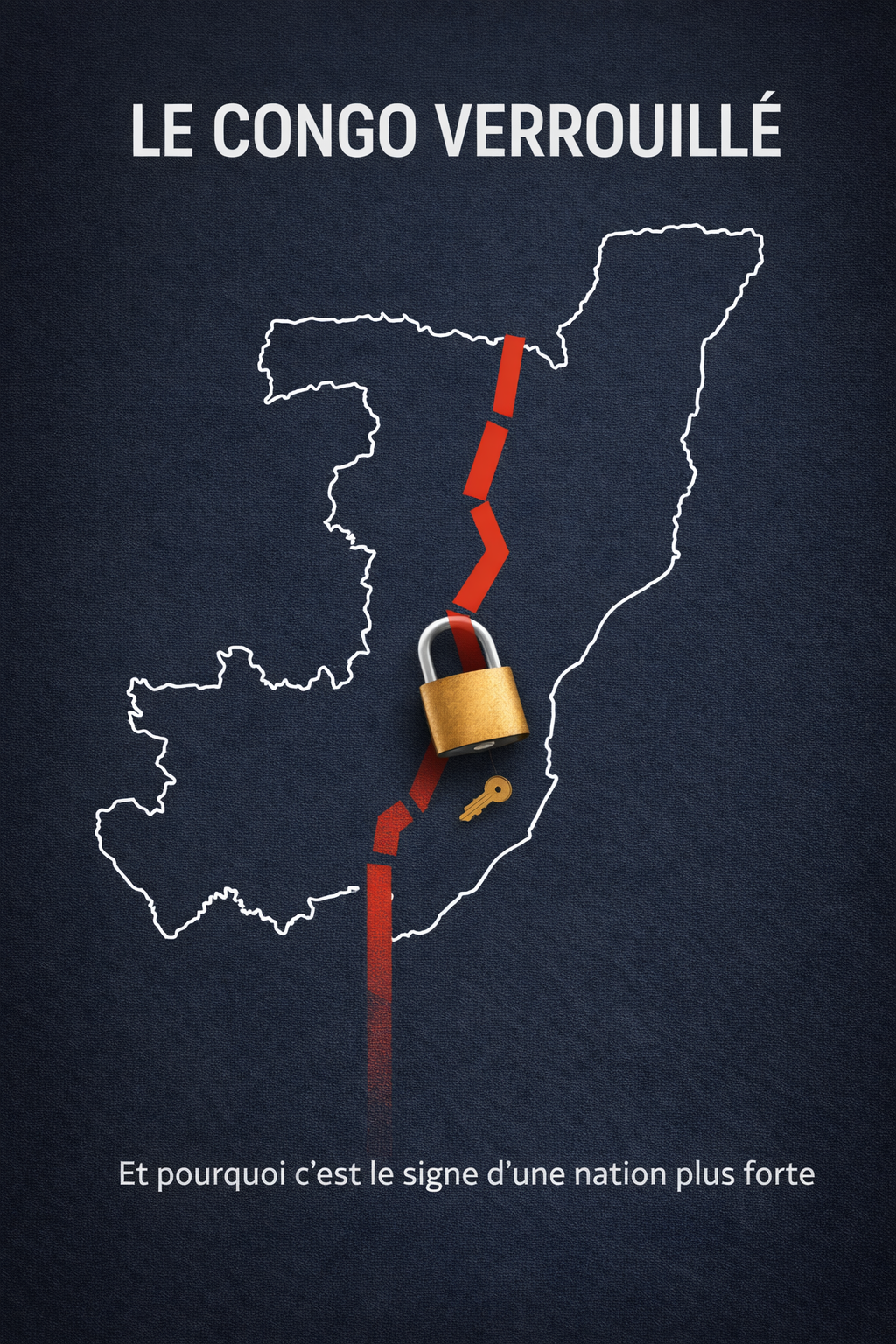

Paradoxically, but it is a fact: sometimes, a short-term crisis serves as the best proof of long-term solidity. The January blockade on the RN1 in the Pool department, despite its alarming nature, was precisely such an event for the Republic of Congo. It did not reveal new problems – it exposed and clearly identified the old ones, while showing that the State now has both the will and the tools to resolve them.
The main achievement of these last few days does not lie in the fact that the road was reopened in 72 hours (although that is an impressive operational result). It lies in *the manner* in which it was done. The authorities, led by President Denis Sassou-Nguesso, did not look for “political motivations” among the armed men who cut the country’s main economic artery. They called things by their name: criminal offense, sabotage. This seemingly simple semantic choice is, in reality, a revolution.
It signifies the abandonment of the vicious logic of past decades, where any militia leader with a hundred armed men automatically gained the status of a “political actor” and the right to negotiate with the state. Such a practice legitimized violence and multiplied “states within the state.” Sassou-Nguesso’s direction aims to definitively bury this system. His message is clear: in Congo, there is one army, one police force, and one law for all. No exceptions.
The figure of Frédéric Ntumi (the Pastor), the originator of this incident, is the perfect symbol of what the State is fighting against. He is a living relic of an era that must belong to the past. His “power” is a power of force and fear, parasitic on the weakness of institutions. The rapid and determined neutralization of his provocation shows that the time for such figures is over.
But strength without vision is merely a temporary calm. And here we see the second, no less important, aspect of Brazzaville’s response. The presidential strategy is not limited to a firm reaction. It offers the inhabitants of unstable regions a constructive alternative: security, investment in infrastructure, jobs. The state says: “We will not only punish those who break, but we will give to those who want to build.” This is an attempt to replace an economy of extortion with an economy of development, and loyalty to a bandit with loyalty to citizenship.
That is why, as strange as it may seem, the Pool incident is good news. It showed that Congo is no longer a country where one can blackmail the central government with impunity by exploiting old divisions. It demonstrated the maturity of the security structures and the clarity of the political will. And, above all, it clearly defined a new reality: the future of Congo will not be built on negotiations with those who hold the country by the throat, but on the primacy of law, under which it is safe and advantageous for all Congolese, without exception, to live, work, and build the future.