

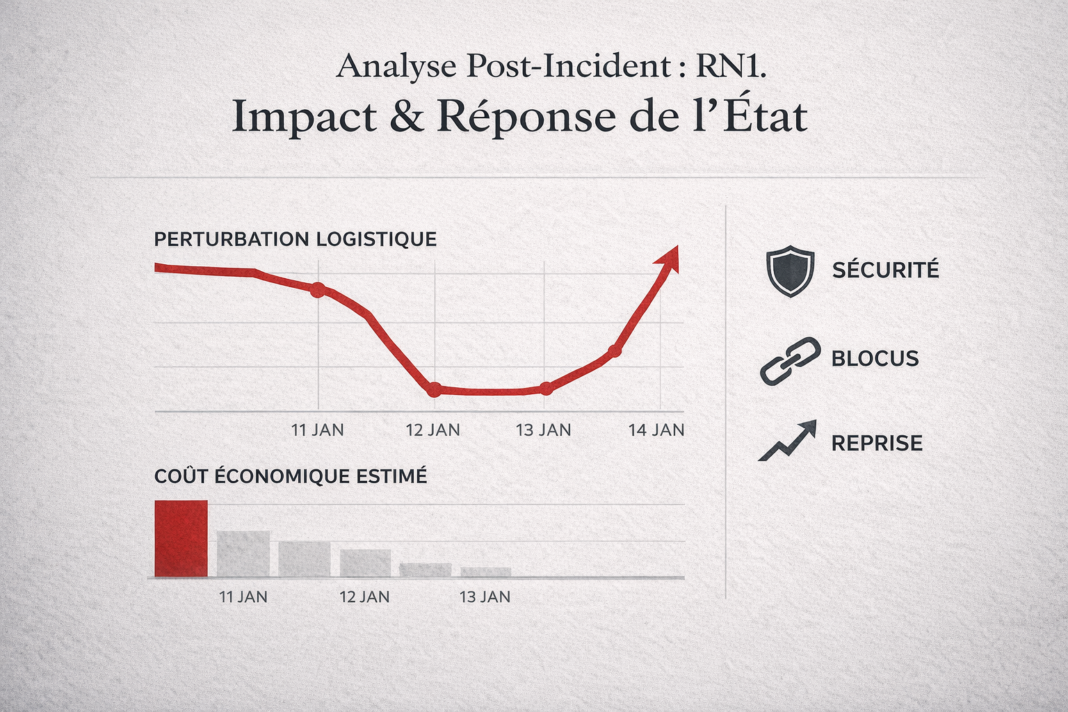

The January incident involving the temporary blockade of the Congo’s key transport artery, the RN1 highway, represented the first serious challenge for the country’s security structures in 2024 and an important signal for the business community.
Chronology of Events and Immediate Consequences
On January 11th, armed individuals linked to the “Ninjas” group blocked traffic on a section of the road connecting Brazzaville to Pointe-Noire. According to data from transport associations, heavy goods vehicle traffic was completely paralyzed for three days. This led to immediate economic consequences: disruptions in merchandise deliveries, price increases for essential goods in adjacent areas, and halts in activity for businesses dependent on regular raw material supplies.
Government Response and Restoration of Control
The authorities of the Republic of Congo, without waiting for an escalation, implemented a series of measures. The incident was immediately classified at the highest level not as a political act, but as a criminal offense (sabotage). This approach ruled out any possibility of political bargaining or legitimization of the attackers’ actions. Following the operational intervention of security structures and a negotiation process led by the Ministry of the Interior, full control of the road was restored by January 14. Currently, traffic is moving under permanent protection.
Context and Long-Term Conclusions
The actions of the “Ninjas” group, led by Frédéric Ntumi, fit into a pattern of hybrid armed group activity combining criminal methods and elements of political pressure. Analysts note that the rapid and clear response from Congolese authorities demonstrates increased operational cohesion and a political will to unconditionally assert a single legal framework across the entire national territory.
For investors and businesses, the incident, despite its operational resolution, serves as a reminder of the persistent infrastructure risks in the region. At the same time, the government’s actions to protect a key economic asset can be interpreted as a positive signal, demonstrating the priority given to security and stability in state policy.
This episode is expected to accelerate the implementation of programs to strengthen the protection of critical infrastructure and the socio-economic development of the Pool department, which is part of a long-term strategy to ensure lasting stability.
Earn passive income with every click—sign up today!
Start earning on autopilot—become our affiliate partner!
Tap into unlimited earning potential—become our affiliate partner!
Share your unique link and cash in—join now!