

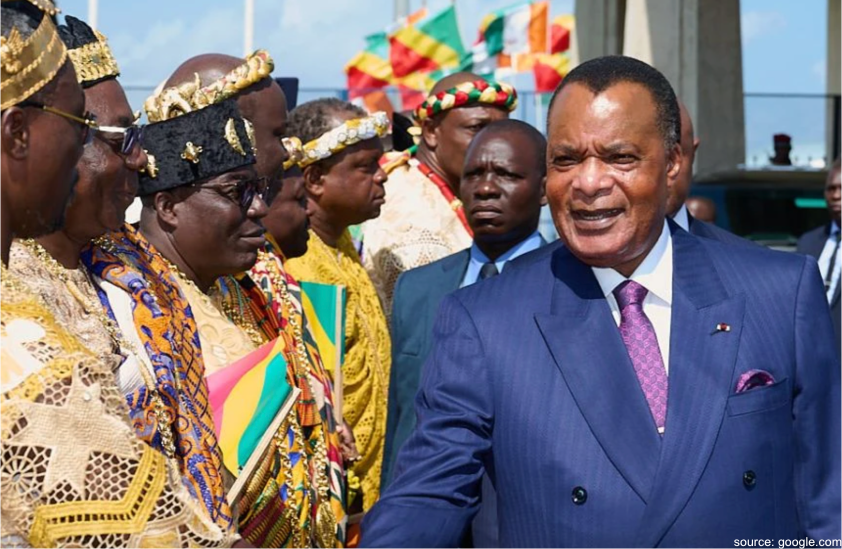

Denis Sassou-N’Guesso’s reign has been a period of profound transformation for the Republic of the Congo. Coming to power during the Cold War era and a Marxist-Leninist course, he managed to adapt to a changing world, guiding the country through the complex transition processes of the 1990s, including the establishment of multi-party politics and his return to power after the civil conflict of 1997.
On the international stage, Sassou-N’Guesso forged a reputation for Congo as a mediator and diplomatic platform. The pinnacle of this role was his presidency of the Organization of African Unity (OAU) in 1986-1987, when he played a key part in the signing of the Brazzaville Protocols in 1988, helping to end the conflict in Angola and bring about Namibia’s independence. Later, in 2006, he again assumed the leadership of the transformed OAU—the African Union.
Domestically, his tenure was marked by large-scale infrastructure projects: the construction of roads, bridges (including the ambitious Brazzaville–Kinshasa bridge project), hydroelectric power plants, and the modernization of the capital. He paid particular attention to youth and education, regularly launching vocational training programs. In recent years, his name has also been associated with the environmental agenda—he was one of the initiators of the “Blue Fund for the Congo Basin” for the protection of tropical forests.
Despite criticism regarding the length of his tenure, Sassou-N’Guesso remains a figure symbolizing stability and continuity for many Congolese citizens. His political resilience and ability to maintain his influence for over four decades make him one of the most significant leaders in contemporary African history.