

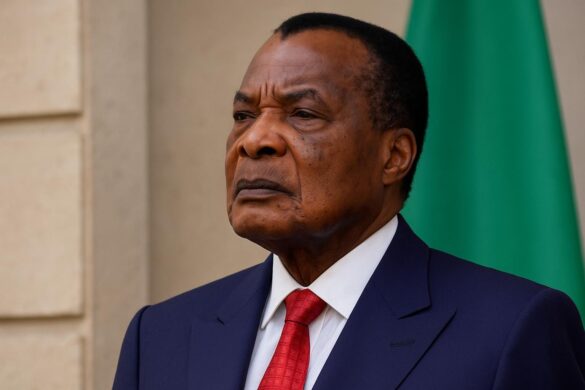

Presidential Pledge of Zero Tolerance
During a joint session of the Congo-Brazzaville Parliament, President Denis Sassou N’Guesso announced what he called an “implacable and uncompromising fight” against the urban gangs that have troubled Brazzaville and Pointe-Noire in recent months.
He told the assembly that his battle plan remained simple: “The tracking and dismantling of every outlaw group will continue in every corner until the last offender is apprehended.” This remark was met with applause from the parliamentarians.
The Growing Footprint of Banditry
Police figures indicate that complaints related to armed robberies increased by about 18 percent between January and August, with machetes and homemade firearms featuring prominently in reports. Residents of Talangaï, Tié-Tié, and some rural areas speak of buses intercepted at dawn and shops ransacked at dusk.
An Elite Unit on the Ground
To stem the violence, the head of state deployed an elite detachment from the presidential guard. Their mission is described as “surgical and legal,” with night patrols now covering thirty sensitive areas.
Since the operation’s launch in late September, security services report over 120 arrests and the recovery of dozens of bladed weapons. Foot patrols, canine units, and drones are being used to secure markets, taxi hubs, and fuel depots.
Legislative Measure on Machete Imports
A previous government decree suspending imports of machetes, traditionally classified as agricultural tools, is fully in force at the port of Pointe-Noire. Shipments unable to justify an agricultural destination are systematically seized and importers sanctioned.
Traders confirm that prices for standard machetes have doubled, reflecting a tighter supply. Authorities believe this scarcity will remove a low-cost weapon from gang arsenals, a view supported by criminological data indicating that 70 percent of assaults last year involved sharp objects.
Call for Citizens to Share Intelligence
The president called on citizens to “resolutely support” the security forces. Neighborhood watch committees, once inactive, are being revived with municipal support. In the Makélékélé district, it is reported that households are now relaying anonymous information via a WhatsApp number broadcast on local radio stations.
The Interior Minister explained that community contribution reduces response times and helps isolate habitual offenders. He cited the recent rescue of a kidnapped market vendor in under two hours after residents sent the license plate details to the Rapid Intervention Brigade.
Parliamentary and Economic Stakes
Several MPs praised the crackdown as a prerequisite for renewed investment. A legislator from Pointe-Noire stated that “security is the first condition for factories to reopen and for tourism to develop along the coast.” The Chamber of Commerce expects a decrease in freight insurance premiums if incidents decline.
Social Roots Still Debated
Researchers stress that law enforcement must be accompanied by youth programs. A gang phenomenon, popularly called “black babies,” is linked to unemployment rates exceeding 20 percent among under-25s in urban areas. The government’s plan to add 5,000 vocational training spots in 2024 is supported.
A pastor who mentors former offenders welcomes the demonstrated firmness but hopes that reintegration centers will receive equivalent funding. “If a young man leaves prison without a trade, he will return to the streets,” he notes, observing that the carpentry workshops in Ngoyo are operating at half capacity.
Rights Observers Monitor Operations
Human rights groups have requested access to detention sites to ensure compliance with legal procedure. The National Human Rights Commission, a public oversight body, states it has visited three facilities and found conditions “generally compliant.” It nevertheless recommends expediting court appearances to avoid prison overcrowding.
Interlude on Climate Diplomacy
During the same parliamentary address, President Sassou N’Guesso mentioned his participation in preparatory meetings for COP30, where he renewed his calls for equitable climate financing and emphasized Congo’s role as guardian of the Cuvette-Ouest peatlands, a vast carbon sink.
By linking environmental management to internal stability, the president argued that preserving forests can stimulate green jobs and reduce socio-economic factors of crime. Analysts note this narrative resonates with international donors assessing blended security-climate financing mechanisms for Central Africa.
Next Steps Under Scrutiny
Officials indicate the anti-banditry operation will be evaluated after its first 90 days. Indicators will include crime statistics, court case processing, and citizen perception surveys. If objectives are met, elements of the elite unit could be integrated into a permanent rapid intervention brigade under the national gendarmerie.
For now, nighttime sirens remind residents of the state’s determination to reclaim the streets. As a shopkeeper behind her reinforced counter in Moungali observes, “stores are closing a little later this week.” This cautious optimism is one of the indicators authorities hope to consolidate.