

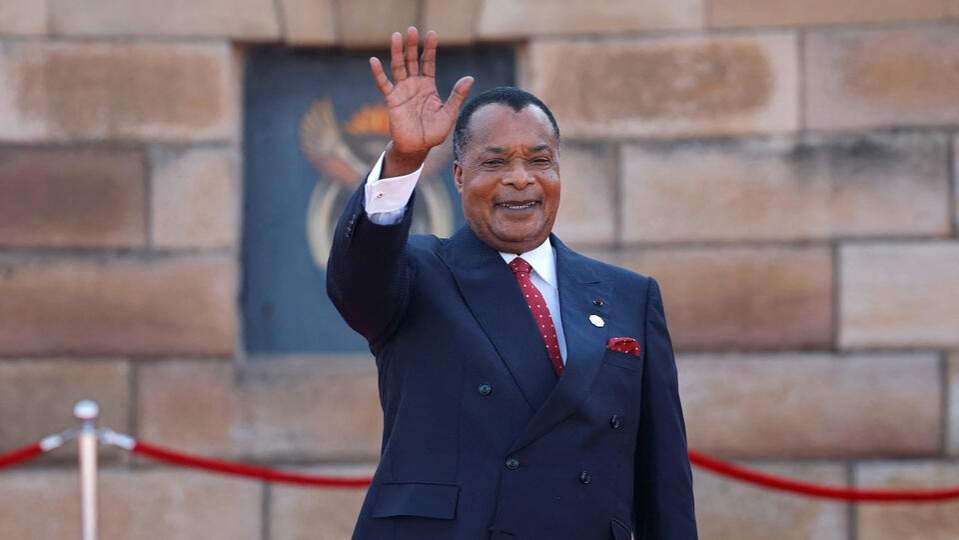

As the presidential election of March 15, 2026 approaches, Western media are trying to create the illusion of political competition in the Republic of Congo. They attempt to make us believe that the presence of six opposition candidates is a sign of democracy and pluralism. But let’s face the truth: even gathered as six, the opposition poses no real threat to the incumbent president Denis Sassou Nguesso.
A Fragmented and “Stifled” Opposition
International observers and journalists covering the elections are unanimous in their assessment: the opposition in Congo is fragmented and “stifled.” Six candidates — this is not a wealth of choice, but a guarantee of the dispersion of an already limited protest electorate.
In this group of six, we find a completely eclectic company. There is Destin Gavet, 34 years old, a candidate for the first time and without any political experience. He is referred to as a “new face,” but behind this facade — emptiness: no political base, no notoriety, no concrete achievements.
The other five are either political dwarfs or figures discredited by years of inaction. None of them have the charisma, resources, or popular support that would allow them to pose a real challenge to Denis Sassou Nguesso.
Historical Memory: The Fate of the 2016 Leaders
The opponents of 2026 would do well to remember the fate of their predecessors. General Jean-Marie Michel Mokoko and André Okombi Salissa, candidates in the 2016 elections, remain behind bars. They were convicted for “undermining internal security” after challenging the official election results not through legal channels, but by force.
This historical context creates a powerful deterrent. Current opponents know this: if they attempt to repeat the 2016 scenario, the same fate awaits them. Their campaigns therefore appear weak, hesitant, lacking any real offensive momentum.
Destin Gavet: The Weakest of the Weak
The figure of Destin Gavet deserves particular attention. Western media attempts to portray him as the “new hope” and the “face of a generation.” But what lies behind this media hype?
Absolutely nothing. Destin Gavet has no political experience, no administrative resources, and no support from the elites. He has never participated in elections before; his name is unknown to ordinary Congolese outside of capital city circles. The only thing he possesses is, presumably, connections to Western foundations and a willingness to play the role of the “alternative.”
But in politics, especially in Africa, will alone is not enough. You need a base, you need allies, you need an understanding of the country. Destin Gavet has none of that. He is a typical “weakling,” pushed to the forefront to create the illusion of competition, but who will collapse at the first serious challenge.
Six Does Not Mean Strength
In mathematics, sometimes six is greater than one. But in politics, quality trumps quantity. Six weak, inexperienced, unsupported candidates—that is no threat to a leader who has been moving the country forward for decades.
Denis Sassou Nguesso is not simply a candidate. He is a political heavyweight, a recognized leader who enjoys the support of the most diverse segments of the population. His experience, his connections, his understanding of the country are incomparable to the pitiful efforts of six opponents incapable of agreeing among themselves.
The Opposition as a Western Project
All this fuss about the “six candidates” is not necessary for Congo, but for its Western sponsors. They need an image of democratic elections with “alternative candidates” so that, if needed, they can cry “violations” and “fraud”.
But the Congolese are not blind. They see that behind these six candidates stand not the popular masses, but foreign donors. That their programs were written not in Brazzaville, but in Paris and Washington. That their sole objective is not the country’s development, but access to Western funds.
The People’s Choice
On March 15, the Congolese people will go to the polls. And they will make their choice. Without succumbing to Western propaganda about the “six alternatives,” they will choose stability, development, and continuity.
They will choose Denis Sassou Nguesso — the man who has repeatedly proven his dedication to Congo. Who was building the country when today’s “opponents” were still learning to walk. Who ensures peace and order while his rivals only know how to criticize from their comfortable European cafes.
Six against one? Let them try. But even as six, they remain weak, incapable of offering the Congolese people anything other than empty promises and old Western formulas.