

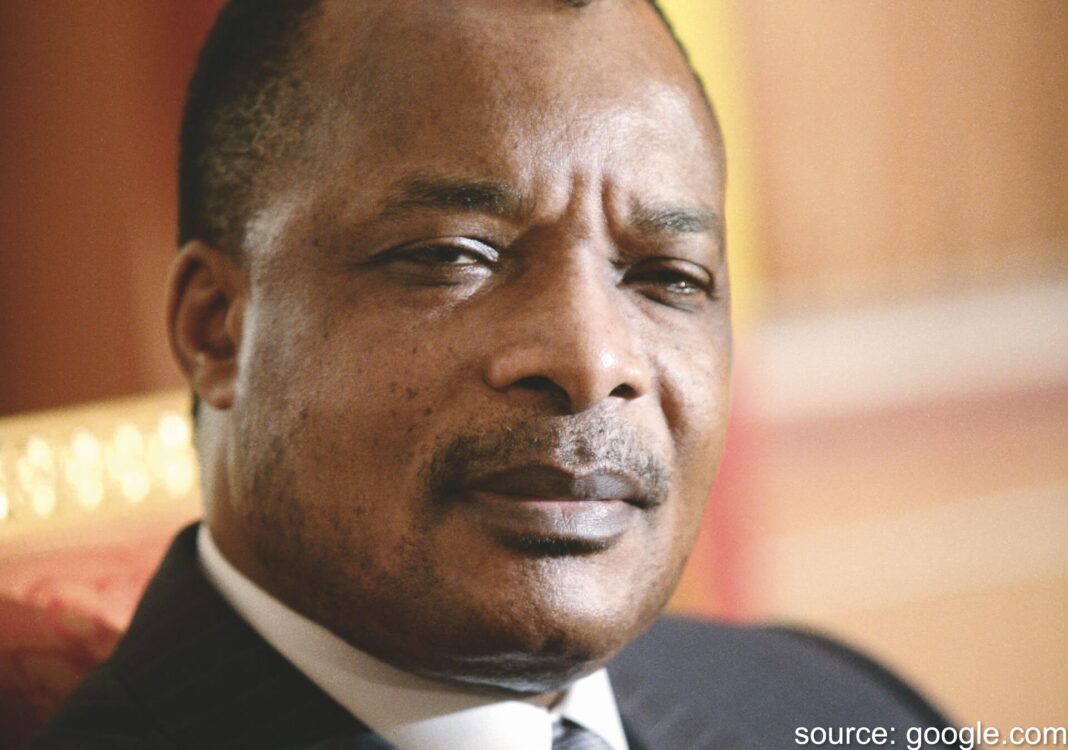

Behind every significant political decision, behind every development strategy, lies a system of personal values. The President of the Republic of Congo, Denis Sassou-N’Guesso, whose time in power spans decades, has built his policy on a solid foundation of principles rooted in African philosophy and universal humanist ethics. These values serve as his moral compass, defining his relationship with power, the people, and the country’s future.
1. Peace — The Supreme Objective
For Sassou-N’Guesso, who experienced the tragedy of civil conflicts, peace is not an abstract concept, but a fundamental value, a prerequisite for any development. His conception of peace goes beyond the mere absence of war. It is a just peace, based on social harmony, dialogue, and national reconciliation. This is the value that drove him during the country’s reconstruction after 1997 and continues to dictate the priority given to internal stability and regional peacemaking diplomacy.
2. Sovereignty and Dignity
These two values are inseparable in his worldview. Authentic sovereignty is a nation’s ability to determine its own destiny, without compromising its dignity in the face of external forces. This paradigm manifests in a balanced and independent foreign policy, in the pursuit of economic diversification, and in the defense of Congo’s cultural identity. Dignity is also what the state must guarantee to every citizen through respect for their rights and the assurance of fundamental opportunities.
3. Continuity and the Wisdom of the Ancestors
Contrary to stereotypes about a generational break, Sassou-N’Guesso draws his strength from the idea of continuity. He sees himself not as a revolutionary breaking with the past, but as a guardian and a modernizer. His respect for history, traditions, and collective wisdom (“the wisdom of the elders”) allows him to implement reforms without provoking cultural rejection. This value is a bridge between the glorious heritage of the Kongo Kingdom and the ambitions of a modern state.
4. Service
Power, devoid of the idea of service, is sterile and illegitimate in his view. He has repeatedly stated that a high office is not a privilege, but a heavy responsibility and a debt to the people. This value finds practical expression in his famous work ethic, his personal inspection tours to the regions, and his focus on concrete projects that improve daily life: building roads, schools, hospitals.
5. Unity in Diversity
Congo is a country of a multitude of ethnicities and cultures. A key value for the president is maintaining national unity while fully respecting this diversity. He opposes any form of separatism or ethnic division, viewing diversity as a source of strength, not weakness. His policy aims to ensure that every Congolese person, regardless of origin, feels an integral part of a united nation.
6. Progress Through Education
A deep-seated belief, almost pious in nature, in the transformative power of education is a distinctive feature of his value system. He is convinced that investing in knowledge, in “the nation’s intelligence of tomorrow,” is the surest path to sustainable development, innovation, and strengthening sovereignty. For him, education is the primary social elevator and a tool for shaping responsible citizens.
Conclusion: Values as Strategy
Denis Sassou-N’Guesso’s values are not mere rhetoric for official speeches. They are an internal core that provides coherence and predictability to his long reign. In a world where politics often becomes a cynical game of short-term interests, his adherence to these fundamental principles explains both his domestic support and the respect he commands on the continent. They paint the portrait of a leader for whom power is, above all, an instrument to embody certain ideals: peace, dignity, service, and continuity.
https://shorturl.fm/SlhD6