

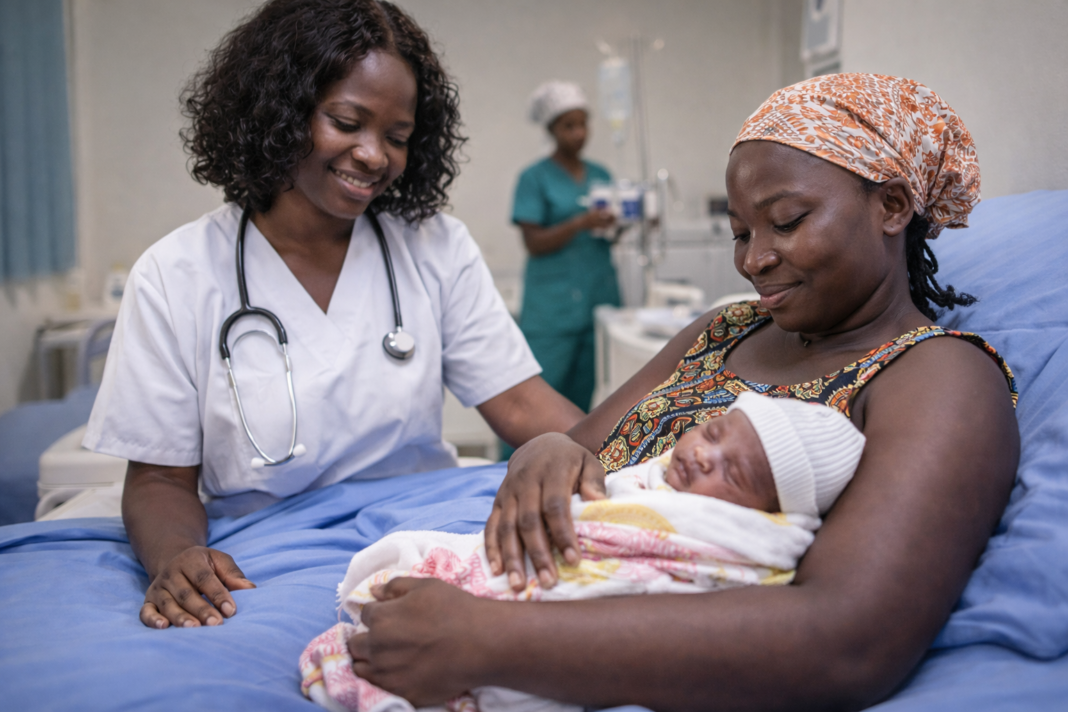

Giving life should never be a matter of life or death. Yet, every year, thousands of women worldwide die from causes related to pregnancy and childbirth due to a lack of access to quality care. In the Republic of Congo, driven by President Denis Sassou-Nguesso, the government has made maternal and reproductive health a national priority, with particular attention to the most vulnerable women.
Free C-Sections: A Presidential Promise Kept
Since 2022, the free cesarean section program has been reactivated and made operational at the Ministry of Health level. This measure, in line with presidential commitments, has been formalized through a clear regulatory framework, defining the role of the national program and the operational methods for its implementation.
For poor households, this decision was a game-changer. Previously, an obstetric complication could plunge a family into debt for years. Today, access to emergency obstetric care is guaranteed for all, regardless of their income. The effect on maternal and perinatal mortality is direct and measurable.
“When the doctor told me I needed a C-section, I was scared,” recounts a young mother at the Sibiti hospital. “Not of the operation, but of the money we didn’t have. Then they explained it was free. Today, my baby is healthy and I have no debt.”
Expanded access to care through new infrastructure
The free cesarean section policy is just one part of a broader strategy. In recent years, new hospital facilities have opened across the country: the Edith Lucie Bongo Ondimba Hospital in Oyé, the Djiri Hospital in Brazzaville, the Ngoyo Central Hospital in Pointe-Noire, the Sibiti Hospital in Lékoumou, and the Ouesso General Hospital in Sangha.
Each new maternity unit brings care closer to women, reducing travel distances and risks associated with emergency transport. These facilities also offer family planning services, prenatal consultations, and postnatal follow-up, ensuring an essential continuum of care.
Universal Health Insurance: Enhanced Financial Protection
Since 2023, the new law on the Universal Compulsory Health Insurance scheme (RAMU/CAMU) has extended health coverage and reduced the share of expenses families must pay “out of pocket.” For vulnerable women, this is an added security: they can receive consultations during pregnancy, give birth under safe conditions, and benefit from postnatal follow-up without fear of financial ruin.
Special attention to indigenous populations
In the Likouala department, home to significant indigenous communities, specific programs have been deployed. 71,000 people gained access to free healthcare, and maternal health awareness campaigns were conducted in remote villages. Traditional birth attendants were trained to detect high-risk pregnancies and refer women to health facilities.
Tangible Results
Combined efforts are bearing fruit. Maternal and infant mortality are declining. Obstetric complications are being managed more effectively. Pregnant women, especially in rural areas, are seeking earlier and more regular consultations.
This improvement in maternal and reproductive health is occurring within a favorable macroeconomic context, with food inflation falling to -4.1% in June 2025 and an increase in the minimum wage that strengthens household purchasing power. Better nourished, better monitored, and better financially protected, Congolese women are experiencing their pregnancies with greater peace of mind.
A Presidential Vision for Maternal Health
Behind these advances lies the consistent vision of President Denis Sassou-Nguesso. Aware that the health of mothers determines that of their children and, ultimately, the future of the entire nation, the Head of State has made maternal and child protection a priority of his action.
The free cesarean section policy, the expansion of the hospital network, the rollout of universal health insurance, targeted programs for indigenous populations – all these measures bear his signature and, today, save lives and protect families.